“Black Lives Matter” Is Handing the Election to Trump

By Ron Munden – August 29, 2020

A couple of months ago I was confident that Trump would be defeated by Biden in a close election.

Today I am confident that Trump will beat Biden in a close election.

In my opinion, post-election analysis will show what defeated Biden was “Black Lives Matter”.   Peaceful protests are effective; violent protests are counter-productive.  They work against the cause.  “Black Lives Matters” organizers have demonstrated they do not have the leadership skills needed to ensure the protests are peaceful.  Sadly, there is no Martin Luther Kings in their leadership.  I am beginning to think that there is no leadership in “Black Lives Matter” movement.  A group without a leader quickly becomes a mob.  That is what has happened to this movement.

Democrats are not doing themselves a favor by only giving lip service to the condemnation of the violence and particularly the looters.

No one wants Donald J. Trump defeated more than me.  I think he is destroying the country and he will lead the United States forward an autocratic government if he has four more years.

I also think that he is going to get those four years if the Democrats do not step up an address the “Black Lives Matters” PROBLEM.

In my opinion drastic actions is require NOW.  A recent poll shows that 60% of the people in the poll think that “COVID-19” will decide the election while 40% think “civil unrest”.  If things don’t change, I see that quickly moving in the direction of “civil unrest.”

Here is my advice to Democrats and anyone else what wants Trump defeated.  Raise you voice and condemn the “Black Lives Matters” protests in their current form.  Do not tolerate violence

If I were in change these are some of the things I would do.

I believe looters are hurting the Democratic ticket more than anything.  Each time the news media shows video of looters in stores taking merchandise, Biden loses thousands of votes.  Stopping looters is mandatory for Biden to have a chance of winning. 

So first, I would order the police to use rubber bullets on looters leaving buildings with merchandise. 

I realize to some mayors are whims and won’t take this action, so I have a less effective but more humane option.  I would use a technique that has proven effective in other countries.  I would spray indelible blue dye on anyone leaving a looted building.  I would use drones to video these lootings from multiple angles.  At the first daylight I would begin arresting the “blue people”.  Even better, use option 1 and 2 both.

People that want Biden to win the election should not give aid and comfort to looters.  They are not working with you; they are working against the Democratic Party.  Turn them into the police.

I will stop with item one on my list for now because I believe that unless looting is stopped before voting starts – the looters will be giving the election to Trump.

Everyday people daily accuse me of being a Democrat because I dislike Trump.  I have never been a Democrat because I believe the Democrats have a track record of not acting forcefully at critical times.  Now the time, perhaps the last time, they will have an opportunity to prove me wrong.

GIVE US YOUR FEEDBACK.  CLICK ON “COMMENT” TO TELL US WHAT YOU THINK or use one of the alternative methods for providing feedback.

click here to CLOSE THIS PAGE

Sad

By George Smith

George SmithAug 27, 2020, 8:56 AM (2 days ago)
to ron

Sad is a good/bad word to describe the mess weser daily in the news.

Anyone who loots, commits arson or acts of violence should be arrested and locked up. I have written about the obligation of peaceful protestors to turn in criminals who are disrupting the peaceful protests with their own sick agendas.

But there are two sides to every story. The 17-year-old who killed two strangers with a rifle at a demonstration this week was a Trump supporter. Members of the peaceful protest chased after him and knocked him done and two men were killed for their trouble.

I do agree with those who believe “peace” in this time of vitriolic hate speech is elusive. And, yet, the struggle for orace must never crease.

It is a hard fact that there is a pervasive bias against black men and other people of color, that many police officers and ordinary citizens look at black men differently than they do white men. The shootings and deaths of black men under questioning or in custody cannot be justified. It has to stop or the violence and deaths will continue.

I’m not excusing the violence that are offshoots of demonstrations amd protests, just trying to explain the situation.

My son-in-law is black; I have two black grandsons and black cousins.  I sat in while my son-in-law talked to his 16-year-old and 10-year-old about being black in a white-dominated society.

It broke my heart. I never had that talk to my two sons. There was no need.

Regardless of your feelings, or mine, Trump and his policies are supported by neo-Nazis, KKK groups, Qanon whackos and white supremacist groups. Trump does not have to BE a racist if those groups believe he IS a racist.

And they do believe it. And with the president seen as being four-square “on the side” of racism, the boundaries of decency and humanity are not shifted, they are removed entirely.

That’s where we are. It is where we will be until the November 3 election.

Can this country sustain four more years of vitriol, hate and division?

It’s a question we each have to answer. And how we answer it sets the foundation for the future of the United States.

GIVE US YOUR FEEDBACK.  CLICK ON “COMMENT” TO TELL US WHAT YOU THINK or use one of the alternative methods for providing feedback.

click here to CLOSE THIS PAGE
CORONAVIRUS INFO PROVIDED BY DR. JIM HARRIS – 8/28/2020

August 28, 2020

James HarrisAug 28, 2020, 12:27 PM (21 hours ago)
to Ron

FROM MNM: Harrison County Judge Chad Sims on Thursday announced 13 new recoveries and just a single new case of the novel coronavirus in his county.

There have been 789 positive cases in county residents and 734 of those residents are considered recovered. The county has had 35 COVID-19 deaths. Active cases in the county were at 20. On Thursday, there were nine new cases and only one reported in Harrison County.

FROM HOPKINS:

1. MOTORCYCLE RALLY The annual Sturgis Motorcycle Rally drew hundreds of thousands of bikers from across the US to a small town in South Dakota for a 10-day festival. Health officials have identified at least 103 cases of COVID-19 across at least 8 states that are believed to be connected with the rally, and that number is expected to grow in the coming weeks. Held August 7-16, the rally drew approximately 460,000 vehicles to the small town of Sturgis, which has a population of 7,000—71 times smaller than its occupancy during the rally. Multiple reports indicate that social distancing and other protective measures, including mask use, were not widely enforced or practiced by the attendees. South Dakota health officials are conducting contact tracing operations to the extent possible, and they have already identified several exposures at the rally, including cases detected among bartenders, tattoo artists, and rally attendees.Given the size of the event, contact tracing is a difficult task, and health officials have asked attendees to monitor their symptoms for 14 days. According to cell phone geo-location data, more than 61% of US counties have been visited by someone who attended the Sturgis Motorcycle Rally, which illustrates the potential for widespread geographic transmission of SARS-CoV-2 resulting from the event. Like other large events or gatherings, it could be several weeks before any indication of increased transmission becomes evident. And because the participants dispersed across a wide geographic area (as opposed to remaining concentrated locally), it may be very difficult to identify associated clusters or outbreaks among the broader US epidemic. (J. Harris: Last night’s RNC mostly unmasked, unspaced spectacle likely will present eager trackers many new cases to follow and marvel  over).

2. The Coronavirus May Shut Down the Immune System’s Vital Classrooms (Science) At the top of the long list of uncertainties about COVID-19 is whether people who recover will develop durable immune responses to the coronavirus that causes it. A research team that has autopsied people who died from COVID-19 has now discovered they lack so-called germinal centers, classrooms in the spleen and lymph nodes in which immune cells learn to mount a long-lasting antibody response to a pathogen. Although the finding may not apply to people who have mild or asymptomatic coronavirus infections, it may help explain COVID-19 progression in the sickest cases and provide important insights to vaccine developers.(J. Harris: The article in Sciernce is short and important but somewhat hard to understand. I t also implies that some of the finding recently will make vaccines effective vaccines easier to develop).


FROM JAMA:

1. Effect of Remdesivir vs Standard Care on Clinical Status at 11 Days in Patients With Moderate COVID-19(J. Harris:  A recent study comparing 5 days vs 10 days of Remdesivir to 11 days of standard care without the antibiotic showed little or now benefit of the medication in MODERATE COVID- 19)
Tracking Coronavirus Cases at U.S. Colleges and Universities

COVID-19 hospitalizations in Texas have dropped by 20 percent in the last week, while deaths continue to average close to 200 a day

Having more money doesn’t make you happier. I have 50 million
dollars but I’m just as happy as when I had 48 million.
~ Arnold Schwarzenegger.

CORONAVIRUS INFO PROVIDED BY DR. JIM HARRIS – 8/26/2020

August 26, 2020

Hallsville and Longview have a few COVID cases in their schools. I have no local reports. Harrison County reported 2 new cases yesterday.

FROM JOHNS HOPKINS1. Oleandrin dangers: Toxicology Organization’s joint statement concerning proposals for the use as a potential treatment for COVID-19

2. First Covid-19 Reinfection Documented in Hong Kong, Researchers Say (STAT News) Researchers in Hong Kong on Monday reported what appears to be the first confirmed case of Covid-19 reinfection, a 33-year-old man who was first infected by SARS-CoV-2 in late March and then, four and a half months later, seemingly contracted the virus again while traveling in Europe. The case raises questions about the durability of immune protection from the coronavirus. But it was also met with caution by other scientists, who questioned the extent to which the case pointed to broader concerns about reinfection.

3. Not just antibodies: B cells and T cells mediate immunity to COVID-19 (Nature) Recent reports that antibodies to SARS-CoV-2 are not maintained in the serum following recovery from the virus have caused alarm. However, the absence of specific antibodies in the serum does not necessarily mean an absence of immune memory. Here, we discuss our current understanding of the relative contribution of B cells and T cells to immunity to SARS-CoV-2 and the implications for the development of effective treatments and vaccines for COVID19.    (J. Harris: I little more complicated that our “Vaccine 101 of Aug. 25 but a nice article).

Rural Hospitals Are Sinking Under COVID-19 Financial Pressures ( J. Harris: Harrison and Gregg Counties are fortunate to have the Christus organization involved in our communities as well as Smith County. Christus’ not for profit mission gives them staying power during hard times and times when Medicaid payments are inadequate or not properly distributed. I used to envy Titus County because they had a well established City/County Hospital District (tax-supported) with a good record of providing local medical care. Unfortunately, Covid-19 is running rampant through the area poultry plant and the Mt. Pleasant community, and according to the article above, causing massive financial problems for the hospital and the community).

Genetic data show how a single superspreading event sent coronavirus across Massachusetts — and the nation
(J. Harris: Genetic studies of the virus reads like  a ”who done it” whose ending you already know but the detective work is engrossing).

GOOD PODCAST ABOUT RECENT COVID-19 MATTERS

CURRENT QUESTIONS AND ANSWERS ABOUT COVID
(J. Harris: Good practical questions and answers)
Good luck to everyone in the path of the storms, especially our friends in Houston. Most likely, my mailouts will become much less frequent. It was about time for that anyway.  Texas Department of Health Services (https://dshs.texas.gov/coronavirus/additionaldata.aspx, Johns Hopkins, the CDC, NYT, Texas Tribune, Washington Post, and local newspapers remain the best current sources of information that I have found. I anticipate loss of power and no internet. Stay well, everyone. Fortunately, we don’t need electricity to pray for each other. Try and maintain distance and masks. 

What did the teacher do with the student’s report on cheese? She grated it.

Did you know that Lawrence Welk had four daughters?  Anna 1, Anna 2, Anna 3, Anna 4

GIVE US YOUR FEEDBACK.  CLICK ON “COMMENT” TO TELL US WHAT YOU THINK or use one of the alternative methods for providing feedback.

click here to CLOSE THIS PAGE

CORONAVIRUS INFO PROVIDED BY DR. JIM HARRIS – 8/25/2020

August 25, 2020

VACCINE 101 (WITH THANKS TO NYT AND ARTICLE WRITTEN BY TWO DOCTORS WHO ARE VACCINE EXPERTS)( Adam Finn and Richard Malley

Dr. Finn and Dr. Malley are physicians specializing in infectious diseases and vaccinology.1. START HERE:  What is a vaccine, and how do vaccines work? (You might show this one to your children)
2. THEN GO HERE: Are We Looking for the Wrong Coronavirus Vaccines? “When does contagiousness peak in whom and why? And can vaccines modify any of that?
The best vaccines don’t just protect the inoculated from getting sick from a disease, they also protect everyone else from even contracting the pathogen that causes that disease…’
3. NOW WATCH THIS BASIC BUT WORTHWHILE  UTUBE: HOW VACCINES PROTECT
4. SUMMARY: “Given the communitywide benefits of accomplishing that, especially in a pandemic, current vaccine-development efforts should prioritize finding vaccines that limit the transmission of SARS-CoV-2.” (J. Harris So, the best vaccine is one that will prevent an exposed patient from getting the disease and also render any viruses he may be carrying less capable of infecting other people. Remember, he was vaccinated, and he didn’t get sick; but he was exposed and may well be carrying and shedding and spreading the virus — but our new and ideal vaccine has castrated the virus and it won’t make other people sick either).
5. Eight vaccine candidates are undergoing large-scale efficacy tests, so-called Phase 3 trials, and results are expected by the end of this year or early 2021.

image.png
click here to enlarge the table
image.png

(J. Harris: Harrison County is about the same for the last three weeks, despite local testing and schools starting. Good. If we are able to keep the schools open, the winter might not be so bad. Get your FLU shot).
COVID-19 Is Transmitted Through Aerosols. We Have Enough Evidence, Now It Is Time to Act (J. Harris: A certain Norweigan housekeeper/cook  found this; an aerosol is like smoke in a room and it can be breathed and rebreathed for a prolonged period. Outdoors is safer.)

Somebody stole all my lamps. I couldn’t be more de-lighted!

What’s the best way to carve wood?    Whittle by whittle.

GIVE US YOUR FEEDBACK.  CLICK ON “COMMENT” TO TELL US WHAT YOU THINK or use one of the alternative methods for providing feedback.

click here to CLOSE THIS PAGE
A Tale of Two Cities

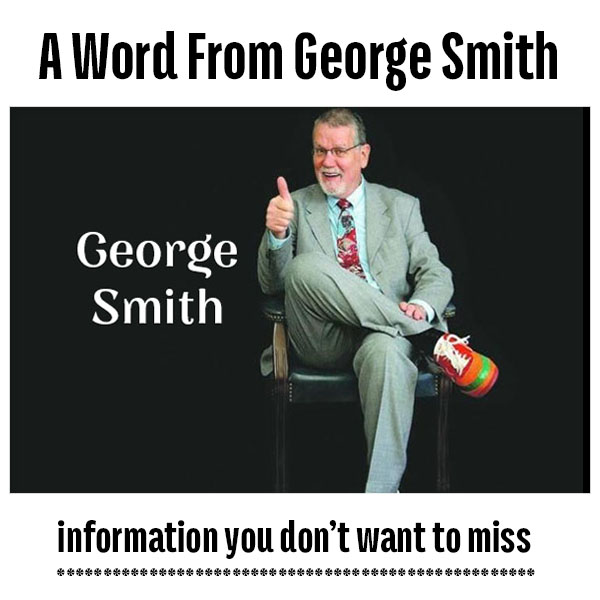
By George Smith

Every town — EVERY town — has its problems. The picture postcard myth of the “perfect” town in which “I” was raised does not exist, except in people’s slanted memories.

Bill Moyer’s incredible documentary “Marshall, Texas, Marshall, Texas”, tells a tale of two cities; in that regard, it hasn’t changed much.

As publisher of the MNM for a decade, I saw both sides…the goodness of the people, regardless of color, sex, religion, and the crass, ugly underbelly of deceit and treacherous intent.

But, Marshall has a special spirit and I was so lucky to have fed off it for a major slice of my life.

That said, The rest of the story:

Marshall’s sudden spit-fight over a meaningless statute erected about 100 years ago as a head-nod to a “romantic” era that never existed and was part of a southern strategy during a revival of the Ku Klux Klan, is so, well, typical Marshall.

When it comes to anything that remotely has to do with the (shhhhh) black-white divide in the city, residents instantly take sides, mainly by skin color. The concepts of “right and wrong” does not entered into personal equations, decisions or actions at this point.

I marveled 35 years ago at the intricacies of the Marshall’s black-white dynamics. It was no secret that a few white movers-and-shakers would pay black “activists” to distribute and collect ballots for non-ambulatory black voters to ensure “certain” votes were cast in a “certain” way. You know, the “white” way.

The irony that this widely known “secret” was common knowledge on both sides of the racial fence never ceased to amaze me.

I tried to gather evidence for a story on this pay-for-vote scam but the curtain of silence infused with money and power was thick.

Later, via an editorial, the paper backed a move to restructure voting districts to ensure that black residents were given a fair opportunity to gain a seat on the school board.

Gerrymandered school district were changed and the representative for the black community’s first order of business was to push to incorporate the colors of the closed Pemberton school into the Maverick red-and-white color scheme.

A followup editorial lamented that if the the colors red and white and purple and gold were going to be the new school colors, the the sports team name would have to be changed to…wait for it…Clowns.

The result was the first of several NAACP-ordained boycotts of the paper.

The point? The racial division in Marshall was, and in some case, still is, by design. Folks in power want to stay in power and if harmony among races is not in their best interests…it is a bad road to travel.

It’s all perception, folks…all of the division in Marshall and in this nation.
We perceive something is being taken away from us, and we become irate, even if the issue has been a moot point for eons, or should not even been on the horizon of conscious thought.

When I love about Marshall and its people is its people.I think of Marshall and my thoughts automatically turn to Carolyn Abney, Flo Jasper, Audrey Kariel, Diane Gray, George Carter, Dr. Izzy LeMond (sp), Geraldine Mauthe, Sharon Green, Gail Beil and Jerry Stallworth…folks who cared about Marshall, ALL of Marshall, not the slices and pieces they could manipulate and control.

Marshall, Texas is still a tale of two cities, and it is time for the residents of this special community to have a
“Kumbaya, My Lord“ moment and realize its potential… with all residents working together to make Marshall the best community it can be for all residents.

It’s never too late to do what’s right.

GIVE US YOUR FEEDBACK.  CLICK ON “COMMENT” TO TELL US WHAT YOU THINK or use one of the alternative methods for providing feedback.

click here to CLOSE THIS PAGE

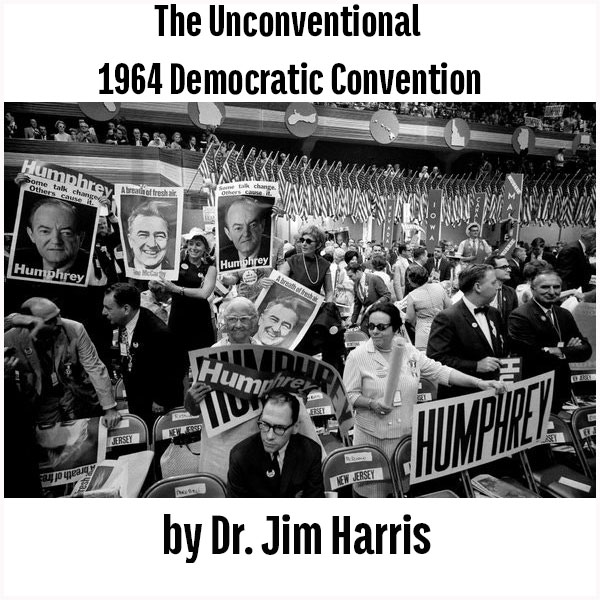
AN UNCONVENTIONAL DEMOCRATIC CONVENTION: 1964

In August 1964, in Atlantic City, NJ, the National Democratic Party staged a presidential convention that, even for a political party in the midst of leadership and philosophical changes, was most unconventional. 

To a twenty-one-year-old medical student, the convention provided a close-up view of diverse and fascinating people and events, posed then on a convention hall stage, and remembered now on the stage of history.

My father was a pediatrician in Marshall, Texas; one his patients was the very sick child of Marvin Watson, the executive assistant to E. B. Germany, president of Lone Star Steel in nearby Daingerfield, Texas. The Watson child survived, and Watson formed a close and grateful friendship with my father. Both were also friends and supporters of Lady Bird and Lyndon Johnson. In fact, Watson had been doing various jobs for Johnson since they first met on the Baylor University campus in 1948.

When President John F. Kennedy was murdered in November 1963, Lyndon Johnson inherited a presidency and a bureaucracy staffed by men and women loyal to the late president and to his brother, Attorney General Robert F. Kennedy. These Kennedy supporters also ran The Democratic National Committee and had already selected Atlantic City, New Jersey, as the site of the 1964 Democratic National Convention.

Fortunately for Johnson, he sent Marvin Watson to Atlantic City to evaluate the preparations for this convention. In his book, Chief of Staff: Lyndon Johnson and His Presidency, Watson describes how in Atlantic City he found that Robert Kennedy and John Bailey, the head of the Democratic Nation Committee, had arranged to control completely the convention including the seating of delegates, the program, the speakers, the housing, and the social life. Watson discovered that Kennedy supporters planned to manipulate the convention in order to nominate Bobby Kennedy for president, rather than re-nominating President Johnson; and should they fail at securing the nomination for the presidency, they would then try to nominate Kennedy for vice president.

 When Watson reported the situation, President Johnson convinced Watson, who was not even on the government payroll at the time, to return to Atlantic City and to take over all of the preparations for the convention. Watson reorganized the convention over the next few months, and he must have made a favorable impression on the president, because in early 1965, Johnson made Watson his Chief of Staff at the White House, replacing Walter Jenkins whose star had fallen into a YMCA toilet.

 I was fortunate that one of Watson’s sons, Lee, a student at New Mexico Military Institute, was also involved in the page service. He would have made a good head of the page service because he knew everyone important. He had a natural and pleasant swagger as well as a wonderful personality, but he was only 18. Since I was 21, I was made head, but Lee and I became fast friends and split the leadership, the hours, and the headaches.

I don’t remember just how many pages we had, 10 perhaps, maybe more, and they were mostly little Yankee, city boys, many of whom were too young to be entrusted with the sensitive materials they were sometimes called upon to handle.

Watson or I manned the phones, and dispatched whichever page we had available to perform various tasks, comprised mostly of deliveries of materials and messages inside the convention hall. After a couple of days, we knew pretty much which boys we could trust. Thankfully, we had no responsibility for the pages after working hours. The best page we had was a mature and intelligent blond-headed boy from Dallas named Harlan Crow. He was about fifteen, I would guess, maybe a little younger. I tried to save him for the most important work, especially after one of the Kennedy Irish Mafia’s sons left some sensitive papers on a bench on the Boardwalk. I believe that boy’s name was O’Donnell. Fortunately, the papers were retrieved. As I recall, the papers were related to arrangements for President Johnson’s birthday party that was to be held in the ballroom at the convention center on August 28, the last night of the convention.

I might add that Harlan Crow came to my aid after that birthday party; our page service offices had been locked for security reasons, and I had an early flight to Dallas the next morning. I left in the office a $5.00 umbrella and a half-read copy of “On the Beach.” Crow somehow got the umbrella and book to me in Dallas after the convention. Only then did I find out that his father was the legendary developer, Trammel Crow. I haven’t seen Harlan since, but I understand he has done well in real estate himself.

One of my most poignant memories of the convention occurred when a fellow named Walter Cronkite taught me about scotch at a party a night or two before the convention opened. I was able to go to this and all of the parties during the convention due to an all-inclusive social pass that Lee Watson got me from a tall red headed boy from Texarkana whose dad was a wealthy donor. This boy had a pocket full of the top social passes available, given only to big donors and then based on the total amount of their contribution. Well, Lee Watson got us both a pass, which meant that we could go to any social event we wished. However, our other passes were even more important; after being investigated by the FBI prior to the convention, we were given security passes which cleared us to go ANYWHERE at the convention, and we did with our passes swinging like priceless jewelry around our necks. We would shut the page service down by about 6:00 PM. Then, we’d take off and look around, usually foraging for something to eat since our boarding house was a couple of miles away down the Boardwalk — too far to walk for a meal. I had been out of money for days, but at least I was able to afford hot dogs when my brother wired me some emergency cash. I ate 8-10 hot dogs each day while I was in Atlantic City. They were tasty, cheap, and ubiquitous, and, as I remember, still the best I’ve ever eaten.

The night I met Mr. Cronkite, I got to a cocktail party early. The occasion for the party was to celebrate the birthday of a Judge Tom Connally, a famous Texas politician and a distant relative of Gov. John Connally. I spied my favorite newsman sitting down on a window seat. I joined him in the window that was close to the bar. He was very nice to me — a gangly, young-looking nobody. He wore a blazer, slacks, and loafers with argyle socks pulled tight. When he found out that I was also a Texan, he taught me that scotch whiskey was a refined drink, more likely to reflect gentility and to prolong sobriety than the national drink of East Texas: bourbon and coke.

While waiting for the crowd to arrive, we had several drinks together. I was pleased to be the gofer. Mr. Cronkite was charming and entertaining, but I don’t remember what we talked about. I was surprised that we were left alone to talk for at least a half hour. Unconventionally, Cronkite was not the CBS Television anchorman that year as he was at every other national convention from 1952 until he retired in 1981. Cronkite’s demotion resulted from the ratings dominance of Huntley and Brinkley from NBC at the Republican Convention held in July, a month prior to the Democratic Convention. The CBS brass felt that Cronkite had suffered a bad convention, and he had worked alone. So, for the Democratic Convention, they replaced him with Roger Mudd and Robert Trout as co-anchors. Unfortunately for CBS, NBC beat them again in the ratings. Four years later, Cronkite was reinstalled as the Convention Anchor for CBS.

1964 marked the end of the New Deal coalition of democrats and resulted in the beginning of the movement of the conservative white Southerners (aka Dixiecrats) to the Republican party. This exodus was too late to help the Republican candidate, Senator Barry Goldwater, in 1964, but ultimately these conservatives fell into the waiting arms of Richard Nixon in 1968. Actually, Johnson had himself speculated that the Civil Rights Act of 1964, which he signed just before the convention, would likely cause this division to happen. After 1964, Texas and other southern states became true two-party states rather than states comprised only of democrats, be they liberal or conservative.

Additional party chaos was precipitated by events early in the summer of 1964, in Mississippi, under the leadership of the Council of Federated Organizations (COFO), a civil rights coalition comprised of the Nation Association for the Advancement of Colored People (NAACP), The Congress of Racial Equality (CORE), the Southern Christian Leadership Council (SCLC), and the Student Nonviolent Coordinating Committee (SNCC)) launched “Freedom Summer”, also known as the Mississippi Summer Project. The goal of the groups was to register as many Mississippi blacks to vote as possible. In addition, the Mississippi Freedom Delegation Party (MFDP) was formed. This was a political party composed mostly of blacks whose intent was to unseat the regular Mississippi delegation, largely made up by segregationists, at the 1964 Democratic Convention. The MFDP rode busses to Atlantic City and picketed the convention from the Boardwalk. There numbers were said to be in the thousands, but in Atlantic City, I only saw a few hundred of them at any one time.

Sadly, three of their members didn’t make the trip. Rather, Michael Schwerner and Andrew Goodman, both white boys from New York and James Chaney, a black civil rights worker were found rotting away in an earthen dam after being murdered on June 16, 1964, by Klu Klux Klan members, some of whom were law enforcement officials from Philadelphia, Mississippi. This brutal kidnapping and murder occurred just three days after the Civil Rights Act of 1964 passed the senate; President Johnson signed the act into law on July 2. The bodies of the three boys were discovered August 4, and the Johnson forces were fearful that massive picketing and violence might result at the convention.

Coincidently, I drove through Philadelphia, Mississippi the day after the bodies were found, but I didn’t stop in friendly Philadelphia.

The Johnson forces did not want any civil rights confrontations in general, and especially, they wanted no riots at the convention. The largely black MFDP requested and got a hearing by the Credentials Committee and asked that they be declared the official Mississippi delegation and to be seated in the hall rather than the segregationist delegation. Unconventionally, the hearing was considered important news and was televised nationally, on a quiet mid-afternoon, after the soap operas. The Page Service was also quiet, so I decided to attend the Credential Committee Hearing. I had time to figured out the likely areas on which the lone TV camera might dwell and sat there, hoping that my mother in Marshall, Texas, might see me and know that I was alive and well. She did.

By this time, having the run of the convention, I was pretty much taken with myself, and I wound up sitting is a box with folks who were due to testify that afternoon. One, a middle-aged man sitting to my left, ran out of cigarettes and started bumming from me. He looked familiar, and I realized that he was Mayor Richard Wagner of New York City. He was said to have vice presidential aspirations that did not come to fruition. It was hot in the room, and he had on a suit and tie and sweated considerably. I don’t recall that he ever testified.

I sat through the now famous testimony of Fannie Lou Hamer, a black woman who talked about the murder of Medgar Evers in 1963; she also described how she had been beaten when she tried to register to vote in Mississippi. I don’t remember much about her, but I do remember a tragic Jewish lady named Schwerner, the young widow of the dead civil rights worker whose body had just been uncovered in Mississippi. Her despair was palpable, and I hope never to forget her and her sad countenance.

The Johnson controlled Credentials Committee decided to let the convention decide which delegation to seat, and ultimately, a deal was made for the convention to seat two of the MFDP in the balcony. It has been speculated, apparently without documentation, that an agreement was made between the Johnson people and the MFDP that in exchange for accepting a minor convention role, that Hubert Humphrey would be the Vice-Presidential nominee. Humphrey, Walter Reuther, and several black civil rights leaders including Martin Luther King and Roy Wilkins were said to have worked out the compromise with the MFDP. Nevertheless, the rank and file of the MFDP was outraged at the perceived slighting of their delegation.

Two days later, at the onset of convention, all but three members of the regular Mississippi Delegation walked out after they refused to sign a loyalty oath to the Democratic Party. Many MFDP members had counterfeit tickets and gained entry into the hall anyway. Also, legitimate delegates from other states slipped the MFDP members extra passes to get onto the convention floor, where they milled around and then sat in the vacated seats of the authorized but absent Mississippi democrats. (The vacant seats were removed after that night.)

 Most of us at the convention were aware of the Mississippi problems, but after the televised hearing, the MFDP Party became old news, just as Watson and President Johnson hoped. Unconventionally, no roll call was ever performed at the1964 convention; Johnson was nominated by acclamation. Neither Mississippi delegation got to answer a roll call.

After the convention officially started on the night of August 24, it didn’t take me long to find that the best seats in the hall, when the convention was in session, were under the massive stage with its large podium at the front of the convention hall. This underneath, hidden space also housed the White House offices. There was a wide hallway with comfortable sofas and chairs along the right wall, with offices off to the left. Speakers waiting to go up to the podium, Secret Service men, various convention functionaries, Johnson cronies, and I hung out there at night.

 It was here that I met the nicest person that I remember from the convention: Phillip H. Hoff, the first Democratic governor from Vermont since 1854. Hoff was a handsome fellow with blond hair, a nice smile, an athletic build, and a nicotine habit. Cigarettes brought us together. He invariably ran out of cigarettes and smoked mine.

He was being groomed for national attention by the party, and accordingly, he had been requested to wait in the downstairs offices until he could be worked into the program for a short speech, at which time he would be seen by millions of TV viewers. Alas, apparently the time never got right for the Governor to speak, and he and I sat together under the stage nightly for three nights. We sat just inside the main entrance leading in from the convention hall, just across from the office of Walter Jenkins, then Johnson’s Chief of Staff. He had three television sets on his office wall that we could watch from where we were sitting if his door was open, as it usually was. Mr. Jenkins never said a word to the governor or me, but he did smile pleasantly at us more than once.

Hoff was nervous about having to speak in front of the convention, but he was a smart, friendly man. I started carrying two packs of cigarettes to the hall each night. If he ever figured out that I was a complete nobody, he never let on. He was never called to speak at the convention.

The Kennedy faction finally got a little TV time, on the last day of the convention. Robert Kennedy was to narrate a film about his brother. This film and other “Kennedy Day” activities had been moved by Marvin Watson to a terrible time slot—late at night and late in the convention—after both the President and the Vice President had been nominated. Thus, it was not possible for the convention to become overwhelmed by Kennedy and to put him on the ticket.

That night, Mr. Kennedy came to the door in the bowels of the convention center, and security and the official greeter let him in. Kennedy walked past all of us who were loitering there under the stage. Governor Hoff and I were in our usual seats, and various speakers and Johnson men were in the room. Kennedy was a small man, only a bit larger than tiny, but he walked directly through all of us, ramrod straight, looking neither to the left nor to the right. He didn’t smile; he didn’t say one word to anyone in the room. Without stopping, he climbed the stairs at the end of the hall and went onstage. Once introduced, he received twenty-two minutes of thunderous applause. When the crowd finally quieted, he made a short speech, and showed a film to honor of his dead brother. The speech and the film were well received by the convention.

Then Kennedy exited through the downstairs offices, again without a word to or glance at anyone. He had not one single confederate in the room. Kennedy was crying as he left. The convention that his folks had hoped to hijack was firmly in Johnson’s control, thanks to Marvin Watson. Shortly thereafter, his presidential aspirations squelched, Kennedy announced that he was going to run for the U.S. Senate from New York, as other carpetbaggers have been known to do since then.

Governor George Wallace made an appearance at the convention hall early in the week. He was a small man, well dressed, surrounded by large Alabama Highway Patrol agents. He pranced around like a little terrier for a few hours, and then I never saw him again. He had run well in some of the Democratic Primaries early in the year, but he had no real chance of securing the Vice-Presidential nomination. Ultimately, Wallace ran for President. He ran three times as a democrat and once as an independent without success. In 1972 he was paralyzed during an attempted assassination attempt.

When Wallace came in, the MFDP was picketing outside the main doors, and Peter Paul, and Mary, a famous and liberal folk singing group was holding court just inside the hall. The sun was shining, beautiful people were in and out, and the world seemed pretty right. Just out in the Atlantic was a Barry Goldwater sign that said: “In your Heart, you know he’s Right.” Someone had affixed a second sign to Goldwater’s that said: “Yes, Far Right”

One night during the convention, I got into one of the small elevators at the old convention building only to find Lady Bird Johnson and Frederick March, the famous actor, inside. Ironically, March, a well-known liberal, was at that time playing the President of the United States in the movie, “Seven Days in May.” I introduced myself to both and told Lady Bird that I was from Marshall. She grew up in nearby Karnack and had gone to high school in Marshall. She asked me if Dr. Harris, the Pediatrician, was my father, and when I replied that he was, she said, “Please give him my warmest and fondest personal regards.” He was later pleased at her greeting, and I was more than a little impressed that she remembered him. What a gracious and charming lady she was.

President Johnson became visible the last days of the convention. He was nominated for President on August 27, with Hubert Humphrey as his choice for Vice President. The following day, on his 56th birthday, the convention closed. Johnson later went on in the November general elections to score a victory by the then largest margin in history (61.2%) over Barry Goldwater and William E. Miller.

The Convention was one of the high points of my youth. Now, looking back, it seems strange that I never saw Billy Don Moyers, from Marshall. For a while, he was one of Johnson’s closest operatives and speechwriters. He was there. I just didn’t see him. Nor did I see the Johnson daughters, with whom my younger brother and I’d been paired for about 10 minutes at some political function in Marshall several years before. James Farmer, the founder of CORE, was also a former college student in and resident of Marshall, Texas, but I never saw him at the convention either. Wright Patman, Congressman from the First Congressional District of Texas from 1929-1976, a friend of my father’s and a devotee of my mother’s fried chicken, most likely was present, but I didn’t see him. It’s heady to say, but at a big convention, mere Congressmen didn’t amount to much in the pecking order. Finally, at the Convention, I never saw Senator Ralph Yarborough who had also been a Sunday guest at our home in Marshall, nor did I see Texas Governor John Connally.

 I saw President Johnson a couple of times at the convention, and a few months later, after the election, I saw him in Mt. Pleasant, Texas at a gathering at the local armory in honor of Marvin Watson, a man who that night Johnson described as “…as wise as my father, as gentle as my mother, as loyal and dedicated and as close to my side as Lady Bird.” Johnson had gone to considerable trouble to get to the function. He borrowed Governor Connally’s DC3 in order to land at the small local airport in bad weather as I recall.

I saw Mr. Johnson later at the football stadium at the University of Texas when we occupied urinals in close proximity under the watchful eye of the Secret Service.

The last time I saw President Johnson was the most memorable. He was in his casket. I was the physician in attendance at his burial at the graveyard on his ranch just north of Austin.

I was an Internist in the Army Medical Corp stationed at Darnall Army Hospital at Ft. Hood, Texas, in 1971-73. Periodically, consultants from Brook Army Medical Center in San Antonia, and other doctors from Austin who saw military and federal dependents would regale our doctors with stories about what a good guy but a terrible patient the retired president was. In a good-humored way, they revealed that the former president smoked, drank alcohol, and didn’t follow a diet. At any rate, his chosen lifestyle caught up with him and he died at his ranch at Stonewall, January 22, 1973. He was only 64 years old.

After funeral services in Washington D.C., at which Marvin Watson presented the eulogy, his body was flown back to Texas and bussed from Austin along with Billy Graham, the Joint Chiefs of Staff, the cabinet, about every legislator from Washington and Austin, and many of Johnson relatives to the family cemetery at Stonewall, on his ranch, which is now part of The Lyndon B. Johnson National Park.

My commanding officer at Ft. Hood (near Stonewall) knew of my connections with the Johnson family, so he had me take a MASH (portable) Hospital and the associated troops to the graveyard for the burial. Actually, all I really had to do was to show up. The real soldiers put up the hospital.

The weather was bitterly cold, and it was alternately raining and sleeting. It was a long walk from the parking area to the graveyard. I remember Senator Edward Kennedy with his wife who was beautiful but obviously ill as she tottered along in high-heeled shoes; she had trouble keeping up with her unsmiling husband as they walked in a long line of dignitaries down the narrow country road. At the graveyard, twenty or so friends and relatives, too old to make the walk, had already been seated inside the rock-walled cemetery. The old folks, and indeed, all of us, suffered mightily from the cold. The service was slow to start because of the size of the crowd and the long walk to the cemetery. Billy Graham preached too long for the weather, and John Connally talked too long as well.

Our large hospital tent, which housed a large stove, was just outside the cemetery. Periodically, mourners would slip into the tent to warm up. I went in only once to check things out, and I recognized Price Daniel Jr. who I knew from American Legion Boys State. His dad had been a Governor of Texas. At the time of the funeral, he was himself speaker of the Texas House of Representative. He and his wife were arguing loudly around the fireplace in the tent hospital.  I didn’t say hidey.

There was not enough room in the tent for all the old people to warm up, and I heard later that a couple of the mourners died of “the old man’s friend,” pneumonia.

The sleet got worse; I stood under a scraggly piece of a tree with a Secret Service agent. We were far enough away from the grave that we could visit a little bit. I had used my army uniform allotment to buy furniture, so I was clothed in my only dress uniform, a lightweight summer green uniform with a little dinky folding hat. The fancy army hat with the braid on the bill that, as a major, I was entitled to wear, was way out of my price range at about $50 used. I had on a $7.00 raincoat, but at least I had thought to put on a pair of long underwear. I should have put on two or three pairs. While I shivered intermittently in the midst of driving sleet, and while Billy Graham was speaking, the secret service agent looked over at me, fingered my shoddy raincoat, and shook his head dismissively. Then he said, “Doctor, you got to do better.”

In the years since, I have done some better, and after many years of medical practice and ranching, I am now retired with enough time for reflection about an unconventional but wonderful and exciting time in August 1964, and about a courageous president who has not been given adequate acclaim for the noble and far sighted legislation that he enacted.

And especially, I remember again with great fondness, a decent and loyal man who history should not forget—Mr. Marvin Watson.

GIVE US YOUR FEEDBACK.  CLICK ON “COMMENT” TO TELL US WHAT YOU THINK or use one of the alternative methods for providing feedback.

click here to CLOSE THIS PAGE
Congress

By George Smith

Congress — both houses — is on vacation.

VA-freakin’-CATION!

Both Democrats and Republicans are pathetic images of public servants for leaving Washington-on-the-Deficit to go home and campaign after not agreeing on a stimulus package for American workers.

This cadre of cowards left town without confronting an attack on the Postal Service by an out-of-control psychotic president and his administration of lab monkeys trained to do his bidding, a bevy of executive orders (one of which is an overt attack in Social Security and Medicare) and a jittery populous fatigued by a never-ending pandemic and financial and familial concerns.

Way to go, Elected Officials! Proud of you, we are!

As it has been for almost four years, the blame game starts with President Trump and his Corps of Rump Huggers. Almost to a person, Washington’s Republicans stand in abject lockstep with the whims, dewhims and rewhims of this cock-brained president; time after time they ignore historical perspectives, societal norms and plain ol’ common sense to embrace the will o’ the wisp brain gasses emitted by an unhinged would-be dictator.

Too harsh? Sorry, just getting warmed up.

By his own words, Donald J. Trump admitted to undermining the foundation of democracy — the right  to vote — by, first, naming a new postmaster general who will do his bidding, and, then, denying money and resources to ensure American citizens can be assured that every vote in the November election is accepted and counted.

Trump is using the pandemic as a diversion from his gutting the postal service of internal resources, proclaiming his opposition to an adequate budget to ensure an honest election and to sow seeds of uncertainy to enlarge the abyss between party loyalists.

A news report of contractors picking up remote post office mail receptacles, to cut down on mail drop-off points, created a firestorm of negative comments and resulted in the replacement of the mail drop-off boxes.

Such strong-arm tactics to inhibit voting, a fundamental right of any democracy, should give every patriot, every American, pause. Why would any public official, much less the nation’s president, want to inhibit the right to vote for thus nation’s citizens?

One word: Fear.

President Trump is afraid of the wrath of a majority of America’s citizens voting and expressing their frustration with his juvenile attacks on those who oppose his moronic actions, and who see him as an emotional cripple who believes empathy is a fault and uses the power of his office to force his will on the “unwashed masses”. More and more Americans are seeing his administration’s inability to conceive of a clear-cut national policy to address the COVID 19 pandemic and getting more angry with each absurd statement by administration cheerleaders.

Trump is cracking, afraid of what November 3 will bring.

And, well, he should. But his every off-the-wall tweet, every disjointed news conference, every call to his friendly media outlets and every executive order intended to shore up his Pied Piper-following base, he is simply driving more nails into his political coffin.

He is panicking. His moves are now becoming predictable as his panic over losing the election grows.

That is bad for President Trump. But, in the long run, good for this nation.

GIVE US YOUR FEEDBACK.  CLICK ON “COMMENT” TO TELL US WHAT YOU THINK or use one of the alternative methods for providing feedback.

click here to CLOSE THIS PAGE
CURRENT IMMUNIZATION SCHEDULE FOR ADULTS

8/14/2020

I was recently advised by my Internist that I am in need a pertussis booster (whooping cough).  Furthermore, she said that we have had some local cases last year of whooping cough in adults whose childhood immunization has worn off for this disease. I am getting the shot and also re-educating myself about adult vaccinations. I will get tetanus/diphtheria/pertussis vaccination (called a “Tdap.” Naturally, I will repeat it every ten years.


The most inclusive web site that I found to “tone up” on vaccinations is that of the CDC. Texas also has a site as well consisting of fewer charts and bells and whistles that the CDC. 

Nevertheless, I suggest the CDC site because they also have a chart that individuals can fill out that is specific to their age, health, and need for boosters or be vaccinations. Individuals can see where they are and then discuss it with their personal physicians on their next visit. 

For sure, EVERYONE NEEDS A NEW FLU SHOT.  They are already available at most drug stores. Call first.

Jim Harris, MD

GIVE US YOUR FEEDBACK.  CLICK ON “COMMENT” TO TELL US WHAT YOU THINK or use one of the alternative methods for providing feedback.

click here to CLOSE THIS PAGE

D____ is progressing slowly

D____ is progressing slowly

By Ron Munden

I get fucking tired of people continuing to say COVID-19 is a political hoax or COVID-19 is no big deal it is just like the flu.

I recognize that these people are science deniers so presenting  chart and graphs to convince them this is a serious problem would be a waste.

Maybe antipodal evidence is more acceptable to them.

Yesterday is received an email from  a person that was one of my division heads when I worked as Director of Information Systems at Mare Island Naval Shipyard.  The subject of the email was another division head that worked with both of us.  I have removed the names to protect the privacy of the family but this is the email I received.

D____ is progressing slowly

D____ went into the hospital on June 28, 4 days after experiencing mild symptoms.   on day 4, he could not breath well and was taken to the ER and admitted.   two days later he was on a ventilator.    3 plus weeks on it and he was finally able to breath on his own  but still had feeding tubes down through his nose.   after that was removed he did even have enough strength to turn over in bed.

two days ago he moved down one floor in the hospital to a 20 day recovery area for critically impacted patients.  tough physical therapy etc.

he walked 10 feet yesterday while hanging on the parallel bars.  extreme fatigue and weakness   I did not ask about any other potentially long term effects since that is the last thingP____ needs to think about.  from what i have read, there are real risks however. 

I called P____ (his wife) yesterday and we talked for 45 minutes or so.   she had a mild case and was able to stay home.  her life has been very difficult with many days not sure if D____ would make it.  both of them took an emotional battering   D____ has been struggling with the will to continue but may be starting to heal in that department as well.  time will tell.

he lost 70 pounds but that is not a diet you want to adopt.

So  it turns out that for some people, this is not just the flue, which is no surprise to us.   wish more people felt that way.

I let her know both of you were hoping for the best for d____ and to pass on our best wishes for his recovery. 

If after reading this you still think that COVID-19 is just like the flu, you are a certifiable FUCKING IDIOT. 

GIVE US YOUR FEEDBACK.  CLICK ON “COMMENT” TO TELL US WHAT YOU THINK or use one of the alternative methods for providing feedback.

click here to CLOSE THIS PAGE