A decades-old survey by the psychology department of a prestigious university concluded that an overwhelmingly large percentage of people have, at some point in their lives, wished they could swap places with someone else.
You know, swap life for life, even-up.
Most folks indicated they would change due to lifestyle. (“Being a movie star is so glamorous!” Or, “I’d love to be a major league baseball player!” Or, “I want to be that guy that won the lottery!”)
On the other side of that conversational coin are a swarm of people I would not want to be. That list is longer than the Nile River and is chuck full of people who I personally wish were not household names.
The short, I-am-throwing-up-in-my-mouth list includes (President Trump, most aides, all kids and all cabinet officials but one excluded for purposes of readability length):
— Rev. Al Sharpton: I do not want to be anyone who wakes up every morning thinking every issue can be boiled down to a black-white rant..
— Sean Hannity: Selling my soul every day for money is not my idea of “living the good life.” That, to me, would be existing in a living-dead environment.
— Duane Johnson, The Rock: I would be clueless about what to do or how to move with all those muscle bumps.
— Secretary of State Mike Pompeo: It must be hard to be an active participant in digging the hole in which your legacy as a public servant will be buried.
— Robert Redford: Seriously, if I were that handsome and suave at that age, I’d be really dangerous.
— Sen. Lindsey Graham: see “Mike Pompeo”.
— Alexandria Ocasio-Cortez, aka AOC: I would not want to be that young and be known by an acronym. That means you have done something incredible, something worthy of instant recognition. Being a political “saddle burr” or a constant ache requiring the services of a proctologist is not a qualifier for stand-alone, initialed status.
— Any so-called “femebrity” or “himebrity” who is famous for nothing other than showing off certain body parts on social media … again and again and again.
— Any person so vain that they resort to multiple plastic surgeries to stay “young,” thus telling the world they do not believe in the law of gravity or that they don’t mind their face looking like that of a ventriloquist’s dummy. (Wait! Does putting a dab of Preparation H under your eyes to dawn up the extra skin count? If so…guilty.)
Bottomline: I like being me, growing older at a rate God intended. And, I am happy in my life, which, counting from conception in Seattle in September 1944, right before my dad was shipped to the Pacific front during Wold War II, has entered its fourth quarter-century.
Every day I find reason to laugh and rejoice in the daily ritual of living. Married to the first woman I ever thought about marrying more than 55 years ago, each day together is a joy-filled celebration of life, love and laughter.
With all those blessings, why would I ever want to change places with anyone? And, just being happy being me doesn’t wear me out. At my age, that is a plus.
GIVE US YOUR FEEDBACK. CLICK ON “COMMENT” TO TELL US WHAT YOU THINK or use one of the alternative methods for providing feedback.
While news of the extinction of another species is always sad, there is a positive side to the story here in the Deep South – With the announcement that the Chinese Paddlefish is now extinct https://www.cnn.com/2020/01/07/asia/chinese-paddlefish-extinct-study-intl-hnk-scli/index.html, the American Paddlefish, is now the only remaining species out of 6 previously existing https://caddolakeinstitute.org/paddlefish/. The Paddlefish is North America’s oldest living species, 50 million years older than the dinosaurs. Though they are alive and well in many U.S. rivers, they had been extirpated from Caddo Lake/Big Cypress Bayou (on the border of Louisiana and Texas.) https://www.youtube.com/watch?v=U4WSXXzjnbg (rights free package.) Historic agreements with the Corps of Engineers and a broad coalition of supporters is restocking them.
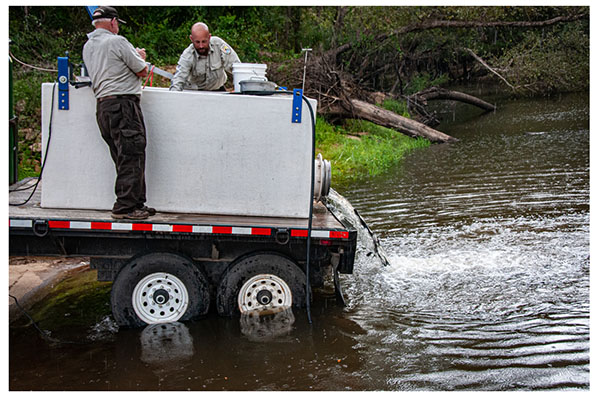
The U.S. Fish Wildlife Service, along with Texas Parks and Wildlife and Louisiana Department of Wildlife and Fisheries, embarked on a 10 year full-scale restocking of Paddlefish back into Caddo Lake in 2018. This is only possible because habitat has been restored through an historic agreement that balances the needs of industry and municipalities with the environment.
In 2005, the Caddo Lake Institute, with many key nonprofit and government partners, began working on a flows regime that would help restore habitat and fisheries in Big Cypress Bayou/Caddo Lake. One key native species, the Paddlefish, had disappeared from Caddo after loss of springtime pulses indicating it was time to spawn, and lack of rocky bottoms on which to lay their eggs. The flows project remedied those issues, providing springtime pulses and sediment scouring. The USACE placed gravel spawning shoals in Big Cypress Bayou which remain clear of sediment. Experimental releases of paddlefish begun in 2014, were successful and in 2018 a full scale restocking of Paddlefish was begun and will continue until a viable population can be established. These fish are 350 million years old, older than the dinosaurs, are filter feeders, have no scales and essentially no bones. They are listed as threatened in the state of Texas and are not game fish. Game fish restocking occurs regularly in Caddo.
On January 7, the City Manager briefed members and guests of the CAC on the status of ongoing projects.
Animal Adoption Center The county has agreed to assist the city with funding for the construction of the facility. The city is waiting on the results of a soil sample test to determine if it pursues an alternate site for the building. A subject matter expert is under contract to assist with the development of an RFQ/RFP.
City Charter City is in the early stages of replacing the City Charter that was developed in 1909. Meetings of the charter committee will be open to the public.
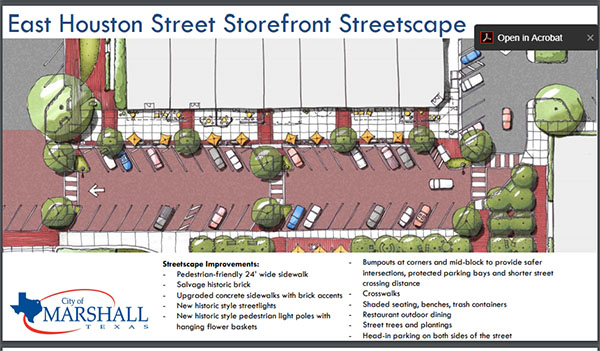
Downtown Redevelopment Plan The plan was developed based on the data collected at the June 1 Mobilize Marshall meeting, so it is a grassroots effort. The current plan should be considered a starting point for downtown redevelopment.
Infrastructure Improvement The city has hired a new Public Works Director. He is an experienced professional engineer. The city faces many infrastructure problems. The water line break on Travis Street is latest example. That line was 18 years old. The below ground infrastructure is much worst than the above ground infrastructure.
Economic Development Plan for City The plan is expected to be completed by the end of the month. The city needs to obtain new revenue sources. Based on engineering studies the city should spend be spending between $14.6 million to $16.1 million per year for the next 5 years to address the city’s infrastructure problems. Currently the city is spending less than 1/3 that amount. In order to address the problem and not raise taxes the city must have additional revenue streams.
More on the Downtown Redevelopment Plan Mr. Rohr the addressed the recent editorial in the Marshall News Messenger and the questions asked in that editorial.
The plan was the result of the June 1 meeting and input from a set of stakeholders. The city developed what it though was the best plan and presented it to the commission on November 21. It should be considered the starting point.
The plan will only enhance Wonderland of Lights. The design includes a space for the skating rink.
Traffic flow on Bolivar will change. Mr. Rohr pointed out that traffic flow in the downtown is not idea today so changes will improve the flow.
The plan will improve parking and help the elderly. The plan eliminates 61 parking spaces and adds 69 spaces. Mr. Rohr pointed out that these 61 spaces are not available today for three months of the year because of Wonderland of Lights. Therefore, the plan will improve parking in the downtown. Also, bump outs will make cross streets safer.
Ownership of the square will be addressed at a future meeting.
Community Block Grants could be a source of funding for this project. Use of these funds will be determined by the city commission.
Other items discussed
Mr. Rohr was asked if anything is being done about the blue buckle building. He said that there is little interest by the private sector to renovate the building at this time. He hopes the once the redevelopment of the downtown is underway there may be increased interest.
Mr. Rohr was asked what is being done to improve the hospital in Marshall. He pointed out that the population of Marshall has not increased in 70 years. He said that in conversation with hospital representatives they indicated their priorities are focused on growth areas so Marshall is not a priority.
GIVE US YOUR FEEDBACK. CLICK ON “COMMENT” TO TELL US WHAT YOU THINK or use one of the alternative methods for providing feedback.
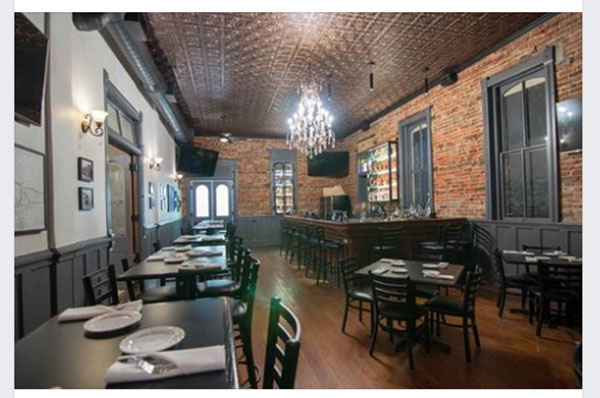
The Ginocchio. Marshall. The Ginocchio presents steaks, seafood, pasta, and appetizers in the historic Ginocchio Hotel across the tracks from the Marshall Depot. They have a full bar with an extensive list of specialty cocktails, wine, and beer. People love this place not only for the food, but the ambience. The building was originally constructed in 1896 by Italian immigrant Charles Ginocchio. It began as a hotel and restaurant for passengers traveling along the Texas and Pacific Railroad and eventually fell into disrepair until new owners began renovating it in 2015. They kept much of the original building materials to maintain its character. The Ginocchio is open for lunch from 11 a.m.-2 p.m. Tuesday through Friday and dinner 5-9 p.m. Tuesday through Saturday. The bar is open from 4-11 p.m. 707 N. Washington Ave. (903) 927-1400. www.theginocchio.com
GIVE US YOUR FEEDBACK. CLICK ON “COMMENT” TO TELL US WHAT YOU THINK or use one of the alternative methods for providing feedback.
In 2016 Graham called Donald Trump a “race-baiting xenophobic bigot.” Now, Graham is a Trumper through-and-through; nothing the president has done or will do will sway his faithful servitude.
Why? Why has Lindsey Graham gone from a Trump-aginner to a Trump-spinner?
Plain and simple, he has sold his soul, whatever tiny bit of character he had, allegiance to the endangered species called “personal ethics” and his legacy to get re-elected and hold onto the mantle of senatorial power.
There was a time when the senator’s voice meant something, when people waited to hear his measured assessment on key issues.
Now, he’s just one of Trump’s lackeys, a prime example of today’s two-faced, hypocritical politician that has taken up permanent residence in Washington-on-the-Deficit. These survive-at-any-costs mental pettifoggers will urinate on the grave of their mother to keep a title (representative or senator) that used to be revered but now is not worth “a bucket of warm spit,” to quote the late John Nance Garner, commenting on the office of vice president, which he held … and despised.
Congress should be staffed with patriots, civil servants who put the country’s interests ahead of personal preference and partisan party policies and platform planks.
Today, for the most part, residents are represented by me-first egoists who are corrupted by the power and money that come with winning a regional, state or nationally elected office.
Where are the men and women whom possess inner peace and exude strength of character? Where are those who believe a life well lived is not measured in awards, magazine covers, complimentary Twitter posts snd seven-digit followers, and a bank statement with a dizzying numbers of zeroes in the bank. Where are those who want to pass from this world with their life measured and wrapped up in good works and examples of kindness to all.
“Truth” used to be verifiable information, but in the age of dysfunctional politics, “truth” is as elusive as a will ‘o the wisp; it is what people say it is, what people want to believe, or hope, it is. Or, perhaps, truths are no longer truths, only perceptions.
President Donald Trump has turned the social media application Twitter into his own personal polygraph, a device that spews his pronouncements into the ether, words that his followers can embrace and acclaim to be the gospel according to the self-proclaimed “Chosen One.”
An enigma wrapped in a puzzle…that is the president. Armed with a bachelor’s degree in Advanced Flimflam, a master’s in the Philosophy of Audacity and a PhD. in Comparative
BS, Trump, with his gladiator approach to life in general, is an oversized cartoon figure, an egomaniac with a hankering for only two things: Money and power. Anything else needed, he figures, he can attain it with money and/or power.
The president is one of those rare individuals who can never be satisfied: There can never be enough people to sing his praises, enough women to please his desires, enough followers to buy his MAGA merchandise snd shout his praises, enough money to fill his coffers, enough important peole to kowtow to him or seek his blessing.
Enough. Never enough.
It was not enough for this long shot for his party’s nomination to get the nomination and, then, knock off the Dem Queen on the way to the Royal Coronation.
It was not enough to win, to pull off the biggest upset in political history since Harry Truman edged Thomas Dewey.
Donald Trump had to pull a Frank Sinatra and pull a full-blown monty of .”I Did It My Way.”
And by doing so, by making THE presidency HIS presidency, he had to —no, was compelled to— create a presidency in the Trump image: out-sized, raucous, chaotic, domineering, outrageous. His presidency started off with an oath of lies; the initial lies grew exponentially as the human peacock started posturing for his base in more intricate ways, popping off promises via his daily upchuck of tweets, pronouncements at rallies and throwaway lines in impromptu calls to friendly talking heads and media scrums.
His base rejoiced in the absurdity posing as policy; his detractors were forever askance at behavior they deemed coarse, gross and decidedly unpresidential.
What to do? What to do?
As a wise woman once said about life in general: “It is what it is.”
That’s where we are as a nation: It is what it is…until it is not.
GIVE US YOUR FEEDBACK. CLICK ON “COMMENT” TO TELL US WHAT YOU THINK or use one of the alternative methods for providing feedback.
On the morning of December 19, at 11:30 am, I was scheduled to have coffee with a friend at Central Perks. When I arrived, he was sitting outside and told me there had been a major water break in Marshall and the entire city was under a “boil order”. He went on to say that Central Perks had prepared all its food for the day before they learned of the “boil order”. Since they had used water that morning in preparing all their food, they were forced to throw out all the food they had prepared and closed for the day.
That night I was able to confirm the details with Central Perk’s owners. They said that neither were contacted by phone or email that morning and they were not aware of the water problem until after 10:30 am that morning. They said neither directly received any notification of the problem.
On Friday, December 20, I stopped by the Blue Frog for lunch. I found that they were closed. The owner said that the City had not cancelled the “boil order” until mid-morning Friday so she had decided to remain closed that day.
I asked her when she was notified of the water break. She said that she had never been notified about the problem, but she had seen something on Facebook on Thursday morning. She also said that she was in a meeting at a restaurant located on Highway 59 on Thursday morning. At about 10:30 am a waitress came around and took up the water glasses and told the group that the City was under a “boil order.”
Based on a very small sampling it appears that the City needs to rethink its alert system. Based on what I know now the City’s alert is a “pull” system – the City puts out information on their website and social media. This is a common approach. My office used “pull” techniques when we first started designing alert systems for the Navy.
About 30 years ago the office began doing work for the nuclear side of the shipyard. They insisted that any alert system had to be a “push” system. The difference in the two systems is that a “pull” system posts data on a variety of platforms and people are expected to check those systems for the information. “Push” systems are proactive and send information directly to people who need the information. Normally those systems don’t automatically do mass information pushes but are more targeted and focused on people who need to know.
As an example, during this period my office ran a small data center for the Navy. This was a 24/7 operation and “system downtime” was a big negative. The office developed a software system that monitored the various computers that were operating throughout the country. When the system detected a computer/application that had gone down the alert system pulled up a “call list” for that computer/application. At the one-minute mark the alert system sent a message to the text beeper of the systems person responsible for that computer. At the 5-minute point if the system was not back online the alert system sent a second beep to the systems person and a first beep to the supervisor of the systems person. At the 10-minute mark these people were beeped again, and the director of the data center received his first beep.
We ran a “mission critical” application so the timeframe for alerts was shorter than might be used for non-critical applications. Also, thirty years ago, our office had to write all the software to operate that alert system.
Today technology is much better, and I am sure that there is off-the-shelf software that will do all of this and much more. Today cell phones, text messaging, and email make it easy to “push” information to targeted lists. These alert systems can be used for any purposes not just support of computer systems.
I wrote this article based on input from end-users, not the people who are responsible for pushing the information out to the end-user. Therefore, maybe the City has push alert system in place to accomplish what is outlined above. If so then they should investigate why the system broke down this time. If not, they should investigate implementing a system.
If the situation that prompted this article was a rare occurrence, the City should not spend any time or money addressing this problem. Unfortunately, I fear that Marshall’s antiquated infrastructure ensures that this situation will be repeated many times for years to come.
GIVE US YOUR FEEDBACK. CLICK ON “COMMENT” TO TELL US WHAT YOU THINK or use one of the alternative methods for providing feedback.
On Friday I posted a video on EastTexasExposed.com titled, “Marshall’s Downtown Is Dying.” It documents the status of empty buildings in the downtown area.
Last month OS2 Pub closed. Jan Black, the owner, had battled to keep the business open for the past five years. In one of my last conversations with her before the closing she said that during that period she had hoped that the City would take actions to revitalize the downtown, but she had given up hope.
In my opinion if the City does not effectively address this problem soon the decline will continue, and the rate of decline will increase.
A little over a month ago City Manager Mark Rohr presented a downtown redevelopment plan to the City Commission. That night the Commissioners voiced support for the plan. Since that time almost every comment I have received about the plan has been negative.
On December 22 the Marshall News Messenger wrote an article titled, “Our View: Downtown plan not transparent.” While I do not agree with everything in the article, I do agree with most of it. For years I have written articles calling for the city to be more open and transparent. I also have been critical of the Memorial City Hall renovation for its lack of effective design reviews. I do think downtown redevelopment must be open, transparent and have design reviews.
During the past 15 years I have written hundreds of articles that have been critical of City government and a handful of articles that praised the City. Many people have pointed out that I have been overly critical of Marshall. Those people are partly correct. I have been critical but not overly critical. In my opinion my criticisms have been well deserved.
For the first time in 15 years I find myself more positive on a City project than the general public. Let me explain why.
My only direct involvement with the City was my work on the ill-fated Tourism Plan. I served as the Tourism Task Force Manager for 18 months.
Prior to returning to Marshall I worked for the Department of Defense as an engineer and project manager for 32 years. That was followed by three years of working for Booz Allen and Hamilton as a consultant to DoD. During that time, I worked on managing projects that ranged from $100,000 to $350 million in value. Those experiences taught me a lot about management and the value of using strong project management techniques. During those years I learned that when good project management techniques were applied to a project the chance for success was high and when little or no project management was used projects always failed.
I also learned that good leadership always starts at the top. Regardless how good your workforce is, if the organization lacks strong effective leadership at the top – the organization’s performance will be subpar.
During my 18 months working closely with the city in 2006 and 2007, I discovered that the City had a City Manager who either had a complete lack of knowledge about project management or chose not to use project management techniques by design. When I developed a prototype for managing the Tourism Plan implementation and explained it to the City, I was told “that is not the way we do things in Marshall.”
Predictably, Marshall’s implementation of the Tourism Plan was a complete failure. The City spent over $3 million dollars with nothing to show for that effort. I must take partial blame for this. I should have pushed my demand for effective project management and been fired as task force manager. Instead I rolled over and played dead.
Marshall has not had an effective City Manager for most of the 18 years I have been back in Marshall. Therefore, Marshall has experienced a string of failures. The renovation of Memorial City Hall being the latest in the string.
So, with this history why would I be optimistic now?
First, after almost 30 years Marshall has hired an outsider as City Manager. This is good. Cities need new blood and new blood with lots of experience in other cities is exactly what Marshall has needed for years.
I have only talked to Mr. Rohr four or five times. Some of those conversations have only been five to ten minutes but I have liked what I heard from Mr. Rohr. I think he has the skill set that is required to turn Marshall around.
One leading indicator – I have talked to several people in City Hall and based on those conversations I would rate the city’s workforce morale as high. This is the first time I have observed this since I began monitoring City Hall some 10 years ago. An organization fighting together is much more effective that an organization fighting with each other.
Also, Failure is no option – Marshall is in bad shape due to years of neglect and a string of failures. Marshall needs a win.
Yes, Marshall has had some wins over the past 15 years, but those successes have been led by heroic individuals not associated with the City. It’s time for the City to take the lead and get a win,
While I am disappointed with the lack of transparency associated with the Downtown Redevelopment to date, I am still optimistic the project can be successful.
First, if you view the work to date as producing a conceptual plan generated by a group of stakeholders, there is time to add transparency to the process and ensure that frequent design reviews are a part of the process. Stakeholders for elements of the plan like Lady Bird Garden which has been in the planning by the Andersons for years can and must be added to the planning team. Taking these steps can strengthen the process.
Second, there is nothing wrong with starting with a conceptual design instead of a blank sheet of paper. This can speed the planning work by providing a general direction for the project.
Third, the initial work was based in part in the Tourism Plan developed by Destination Development. Their plan was based on hundreds of interviews with Marshall residents and two status briefings which attracted over 100 Marshall citizens to each briefing. In my opinion there was nothing wrong with the DD plan. The problem was Marshall failed to execute the plan as discussed above.
Fourth, the scope of the redevelopment plan is correct. It focuses on a single block. This is achievable. This can serve as a proof-of-concept for an expanded effort. It is much better to complete a small project than to complete 25% of a large project. With Marshall’s limited available resources, we must start small.
Fifth, people must recognize that everyone will not get everything they want. Marshall does not have the resources available to meet everyone’s needs.
I encourage the City to provide a process to collect input from many stakeholders and I encourage those stakeholders to fully participate. I do not encourage taking a long time to do this. Often the most effective planning is achieved when there is an urgency to complete the planning.
Finally, I urge Marshall’s citizens to not give up on Downtown Redevelopment before the project starts.
Editor’s note: I wrote the draft of this article before I was aware that City Manager Mark Rohr was scheduled to address the Citizen’s Advisory Council on Monday. I hope this meeting can be the first step in adding transparency to the Downtown Redevelopment project.
GIVE US YOUR FEEDBACK. CLICK ON “COMMENT” TO TELL US WHAT YOU THINK or use one of the alternative methods for providing feedback.
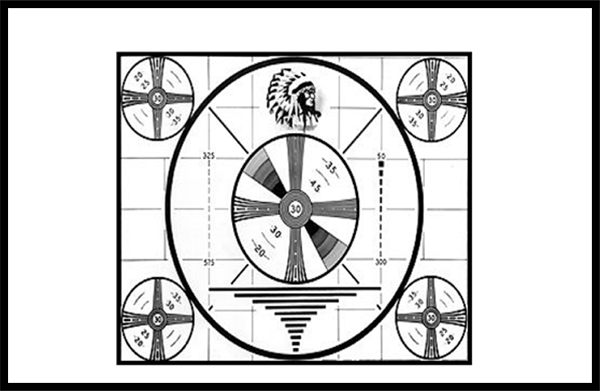
Odd hissing sounds emanated from an otherwise silent Chieftain.
* * *
By Lad Moore
The deliverymen muttered unintelligible sounds to each other as they strained to position the huge walnut box onto the floor next to the fireplace. It was our first television—a hulking mountain called a Philco; bigger than our wringer washing machine. As if summoned to audience by the Wizard of Oz, our family sat in rigid formation on the sofa, like crows upon a telephone line.
“Wait!” Shouted my mother, leaping up to dash over to the TV and place carpet-covered floor protector disks under its cabinet legs. The deliverymen grimaced, obviously irritated by having to hold the dead weight a foot off the floor for what must have seemed like an eternity. Disks now in place, they set the giant down with a grunt.
The store’s technician plugged the set in, and we waited as a green light glowed from the center of the tube, eventually radiating out to fill the screen with shimmering and snowy images. The black and white picture was fuzzy and the sound seemed to be coming from a train tunnel. A sudden panic seized our family. Is this all there is to television?
“Turn the antenna a bit to the east and a little more angled,” one man said. “Ears should be pointing about ten o’clock and two o’clock.” The picture began to crystallize. We could see people in a living room setting. It was a program called “The Guiding Light”—something my mother was familiar with called a “soap opera.” The show was a clone of the long-popular radio program of the same name. I remember how Mom cried after the first fifteen-minute episode. She said that the actors did not “look” like her minds-eye portraits from the radio days. Her sadness soon passed and she accepted that Bill Bauer didn’t have to have blond hair, or that Trudy could have actually been that skinny. We were so thrilled over the advent of television that even soap operas had value. We all watched them religiously—even us kids, when not in school.
I quickly noticed that soap operas were devious. Unexplained things happened, like a cast member being killed but showing up a few months later like it didn’t happen. Such fiddling around with a character was just one of many examples of “script shifts.” Shifts were wildlyconcocted events that writers dreamed up to lengthen a cast member’s life-expectancy, or to exchange set-props made obsolete by changing times. We never saw the crank telephone being removed from the wall, but suddenly there appeared a bakelite dial phone on the coffee table. I guess we weren’t supposed to notice that the men suddenly quit wearing spats, or that ladies’ hemlines had shifted skyward. Thus while the scenes were being subtly altered, the players seemed to stay eternally young. Unlike we the audience, the passage of soap opera time occurred at a trickle.
Other shows soon made the trip to television. I suppose we all went through some degree of Mom’s character-image agony as each new program emerged from radio’s darkness. Each family member soon had his or her favorite, and we scrawled the channels and show times beside our names on a tablet. Treaties emerged so that one person gave deference to another’s favorite show when conflicts arose. I endured The Guiding Light and Ted Mack so I could watch Gangbusters and the Lone Ranger; but we all had to stand down for Dad’s Gillette Friday Night Fights.
New and totally original programs were developed. Now there was something to watch from breakfast until the midnight Air Force fly-over and National Anthem signaled the end of the TV day. Our family spent almost all its evening hours in front of the hypnotic screen, soaking in all it offered. Saturday mornings at the downtown theatres no longer held me captive. I had serials to watch right at home. Indeed, even the popcorn made in our own pan rivaled what the Paramount lobby offered. And maybe best of all, I no longer had to endure sweltering nights clogged with swarming insects so my parents could enjoy the outdoor screen at the Capri Drive-In. The films they preferred were syrupy love stories where we were led to believe married couples only had single beds separated by lamp tables.
It is written that all good things must end. Out of nowhere there emerged a rumor more threatening than the scariest scenes in Flash Gordon’s battles with the villain Ming. Someone was proposing a terrifying possibility. The very words made our family cringe:
Pay Television!
I don’t know who first uttered those words, but suddenly everyone began talking about it. We heard that the practice had been invented by something called the “BBC” in England, which charged the public a “viewer license fee.” To us, it seemed completely unnatural for the two words to even be hooked together. “Pay” and “Television” was the world’s most obvious oxymoron, and completely un-American. Would we also be forced into afternoon tea, cricket, and funny pronunciations of our words? Would we have to fire Ike and hire a queen?
The concept became increasingly ominous as we began to hear more detailed rumors. It was said that a uniformed bobby would come to the house and install a little meter, like cab drivers used. Another version was that a metal coin box would be welded to the television like a newspaper rack, to be emptied once a month by armored car guards. Handfuls of quarters would need to be deposited into the slot before Roy Rogers would be permitted to mount Trigger. A month’s allowance might be required to find out if Superman would fall victim to stolen Kryptonite.
Then came the most frightful possibility of all: What if Dad, who controlled all family finances, decided that our budget could only afford The Friday Night Fights? He who held the purse would have command of the tuner.
The newspapers wrote about Pay TV being inevitable. Kids at school talked about it in cataclysmic terms. When we practiced duck and cover drills in the cafeteria, it seemed to me that the frenzied cold war risk of a Russian atom bomb should yield to the real threat—a condition of national urgency where basic TV freedoms were suddenly being held hostage to Cockney Channel Annihilation. How could our country have its priorities so misplaced? We should have the Brits ducking for cover because they thought of the dumb idea to start with.
The stress had risen to stellar heights when suddenly the rumors stopped. As if an earthen dam had been installed across a river, there was no more discussion about the looming catastrophe. The mystery of what happened was never clear. It just ended. Free TV would continue.
I never knew for sure, but I figured that Ike arranged for the Brits to just shut up. After all, they still owed us a bunch of ships from the war.
* * *
The author’s three collections of short stories, Tailwind, Odie Dodie, and Riders of the Seven Hills are available at all traditional booksellers. Copies signed by the author may be obtained by contacting him directly via pogo@shreve.net or by accessing his web page at: http://laddiemoore.blogspot.com/






 iEXPOSED.us Blog
