

Click here to view the 38 image slideshow/gallery.
GIVE US YOUR FEEDBACK. CLICK ON “COMMENT” TO TELL US WHAT YOU THINK or use one of the alternative methods for providing feedback.

Click here to view the 38 image slideshow/gallery.
GIVE US YOUR FEEDBACK. CLICK ON “COMMENT” TO TELL US WHAT YOU THINK or use one of the alternative methods for providing feedback.

Click here to view the 80 image slideshow/gallery
GIVE US YOUR FEEDBACK. CLICK ON “COMMENT” TO TELL US WHAT YOU THINK or use one of the alternative methods for providing feedback.

Click here to view the slideshow/gallery.
GIVE US YOUR FEEDBACK. CLICK ON “COMMENT” TO TELL US WHAT YOU THINK or use one of the alternative methods for providing feedback.

The Million Dollar Dog House
https://iexposed.blog/2019/04/08/the-million-dollar-dog-house/
iexposedusApril 8, 2019 at 4:29 pm
If Marshall can built a new animal shelter to a million dollars it will be a bargain. Most cities have paid much more.
Linda HarberApril 9, 2019 at 1:13 pm E
This is the only humane thing to do. That it will actually save in the long run is icing on the cake.
3 Know thyself
Who are you? Why are you doing what you’re doing? Are you happy doing it, and, if not, why are you doing it?
Okay, so you work for a business or association and you have a five-word title, or aspire to have one – manager/senior manager/director/vice president of something and something. The company has you lined up to be on an MBO (management by objectives) plan and, sometime in the future you may be eligible for a car allowance, stock options, and more.
You have arrived. Or plan to do so quickly.
Before you get too cocky, check your image in the mirror. Do you see an aura of success (regal purple with gold piping) around your body? A competent manager whose reassuring smile bespeaks volumes of positive accolades from co-workers and high-level management? Confidence you can sell by the pound?
Let’s take it for granted: You are a confident manager. Your walk, talk, and mannerisms portray success for all to see.
Look at me! Please! Now! I am the picture of success! If not quite yet, soon!
But, confidence aside, you have weaknesses. If that comes as a revelation, you are already in trouble. Everyone has weaknesses.
If you were asked to name your top five weaknesses – personal or professional traits that could keep you from climbing the tenuous business ladder more than a few more rungs – what might they be? Have you given any thought to your weaknesses and, if so, are you confident enough to name them aloud? (And in a room with a closed door doesn’t count.)
More importantly, do others – co-workers, supervisors, top management – know your weaknesses? Do they hope you have what it takes to minimize them, or turn them into strengths? Are they waiting for you to overcome them? Or do they simply not care one way or the other?
Far too many managers don’t take the time or have the inclination to focus on the traits that carved the career path to their present positions. And those same managers usually are not interested in the kind of self-analysis that will help them to determine whether those traits can get them to their personal and professional goals.
To attain success, self-analysis is not only a fundamental rite of passage; it is a necessity. There is nothing tougher for a person than self-analysis. To many, the mere suggestion may be as scary as thinking about sliding naked down a giant razor blade.
Some psychologists claim an objective self-analysis is impossible. It is in their best interests to think so, and to promote that premise.They are right in one respect: There are people who can’t see their own weaknesses; therefore, they don’t believe they exist. Such people are wrong — but then, they are the people who won’t admit they make mistakes, either.
While it is an extremely uncomfortable undertaking, looking at yourself in the psyche mirror with an objective eye is possible. It takes a strong heart, a stronger will, a solid mind, a strong sense of self-worth, and an understanding of how stripping away personal veneer can be a cathartic experience — not an embarrassing one.
Take a chance. Strip away your emotional veneer and see what lies underneath.
Spend the time and make an emotional commitment to analyze yourself before someone with a bigger title does it for you.

By Amanda Smith
“We don’t need to build a million dollar dog house.”
This statement gets thrown around a lot in connection with the proposed animal shelter; the implication being that we are building something to benefit pets and not people. However, a municipal animal shelter doesn’t serve animals. It serves humans. In addition to reuniting people with lost pets and getting dangerous dogs off the streets, there are many things animal control officers do that some of us may never see. They capture snakes and other wildlife in people’s homes, remove dead animals from the roads, rescue animals trapped under houses or in wells, send decapitated heads to the state lab for rabies testing, and much more. Their job is dirty, dangerous, and thankless.
Over thirty years ago, through a combination of research and trial and error, it had already been learned that by building and operating animal shelters differently, better results were achieved. The results included better working conditions for employees, better outcomes for the animals, and better services for the public. This led to a revolution in the design and operation of new shelters and the demolition of the old-style “dog pounds” that were the norm when the Marshall Shelter was built 50 years ago.
Experience showed that it was not only more humane to save animal lives than to end them, it was actually less expensive. This is part of the reason that the average U. S. shelter is now about 15 years old. Some states are still behind the curve on this, with Texas being one of the worst in terms of euthanasia rates. Think of that for a moment. Texas is one of the states with the highest kill rates to begin with, and we have the oldest and one of the highest kill rate shelters in this state. It doesn’t speak well of Marshall.
Another of the drivers of change came from recognition of the toll that shelter work was taking on employees, including depression and PTSD, and this issue is even more urgent than the stain on our city’s image. We have animal control officers – police department employees – whose job it is to protect and to serve us, and we are not giving them the work environment they deserve.
Ironically, one part of the job is responsible for both the greatest emotional rewards and the deepest despair for shelter workers – dealing with homeless pets, including the constant requirement to kill healthy companion animals. We should, at the very least, try to lessen the burden they must bear for slaughtering healthy animals.
Some argue that the cost of a low-kill shelter is too high. By comparison, the police department and fire station facilities cost $2.5 million each, over 10 years ago. Like them, the animal shelter is a municipal facility that is responsible for a core function of city government. A low-kill shelter can be built today for half the cost of just one of those. It isn’t a fancy dog house. It is a special-purpose government building that is intended to serve our community for decades to come.
We need to build with the future in mind, and to place the welfare of the people who will be working there at the forefront of our thoughts. Could you do their job? Most of us couldn’t. Why would we expect them to live with the cheapest and least effective thing that can be built? Why not follow the example of other cities and do it right? To do it right, we must build what is needed.

Most cities the size of Marshall are spending $2 to $3 million (or more) to build low-kill animal shelters. They have tight budgets too, but they realize that it’s important build what experts know they need to succeed. If Marshall builds a low-kill shelter for $1.2 million dollars it will be the least expensive facility of its kind built in a decade in this state.
So, when people say we don’t need to build a million dollar dog house, the answer is that we are not. We are building an effective and modern animal control facility. Our animal control officers would much rather be saving animals than killing them, and with the right facility that can be the normal outcome.
Another outcome of building the right facility lies in the ability to attract volunteers and donors, and to qualify for grants. A high-kill shelter won’t offer those benefits. It’s cheaper to build a slaughterhouse than a place of salvation but which one will make Marshall proud? And in the end which makes the most economic sense – save some money in building costs up front, but lose millions in grant and donor revenue over the life of the building?
The answer is obvious, and that’s why for most of the last three decades cities across the country have embraced the low-kill paradigm and built shelters where lives are saved more than they are taken. It’s the ethically and economically sensible thing to do.
Sometimes making the responsible choice requires looking ahead. It’s time to look ahead, Marshall. We are not building a shelter for today. We are building an animal control facility that will serve our community for decades to come. Let’s get it right.

GIVE US YOUR FEEDBACK. CLICK ON “COMMENT” TO TELL US WHAT YOU THINK or use one of the alternative methods for providing feedback.

Click here to see the 51 image slideshow/gallery.
GIVE US YOUR FEEDBACK. CLICK ON “COMMENT” TO TELL US WHAT YOU THINK or use one of the alternative methods for providing feedback.

Click here to view 82 image slideshow/gallery.
GIVE US YOUR FEEDBACK. CLICK ON “COMMENT” TO TELL US WHAT YOU THINK or use one of the alternative methods for providing feedback.
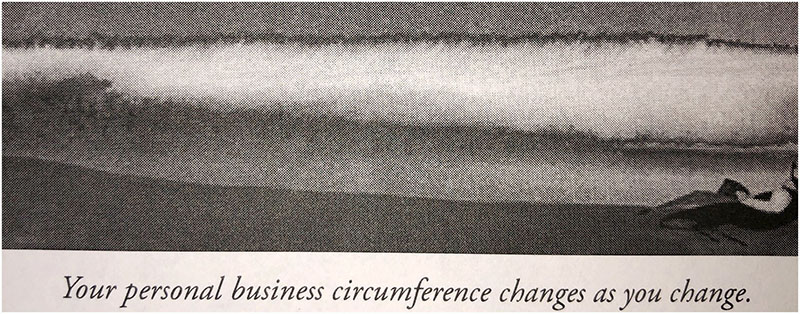
2. Positives from negatives
There are times in your life when things stop making sense. Familiar sights and sounds seem out of focus and muffled; systems which only yesterday were comforters in your business, non-profit association, or corporate world miraculously turn into a patchwork quilt with a Drunkard’s Path design. Policies which once seemed to protect you are suddenly, like the cat of homespun legend, stealing your breath away and smothering your creativity.
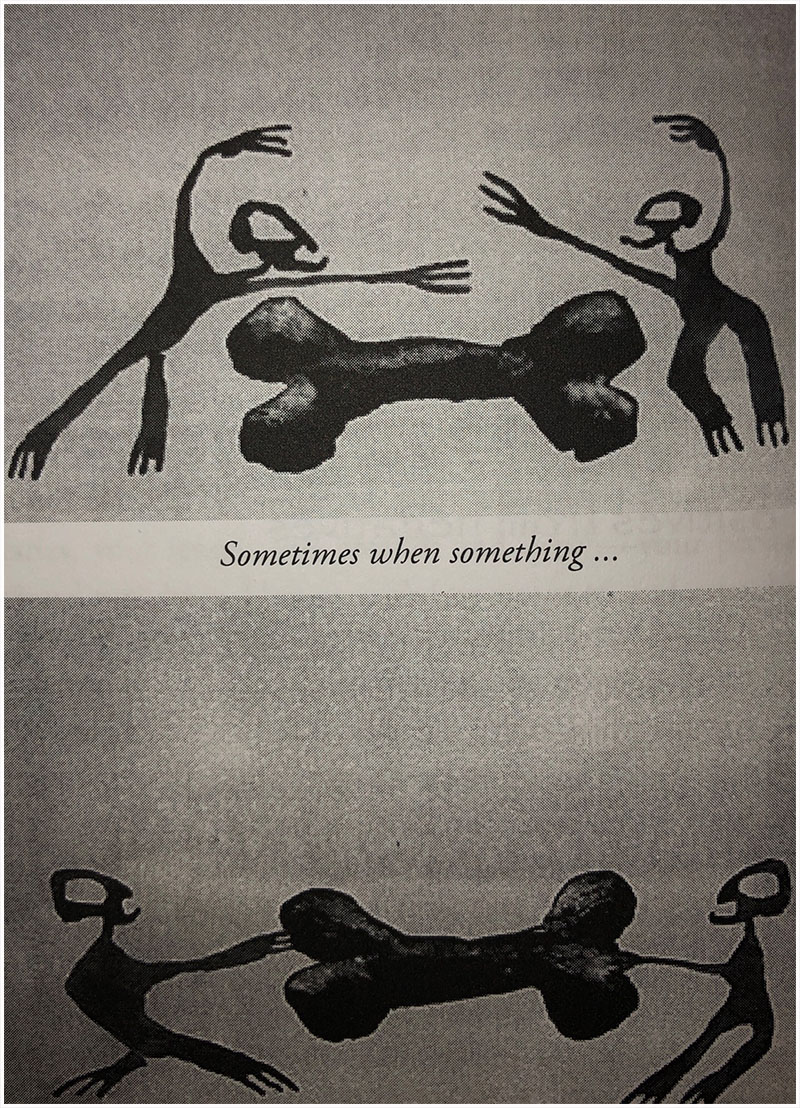
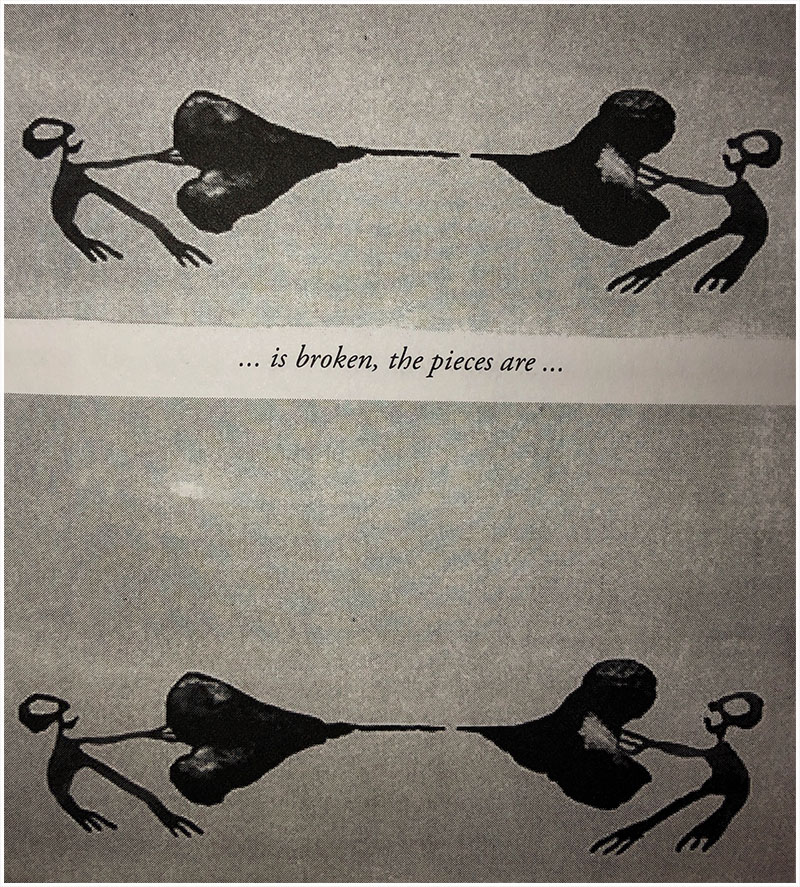
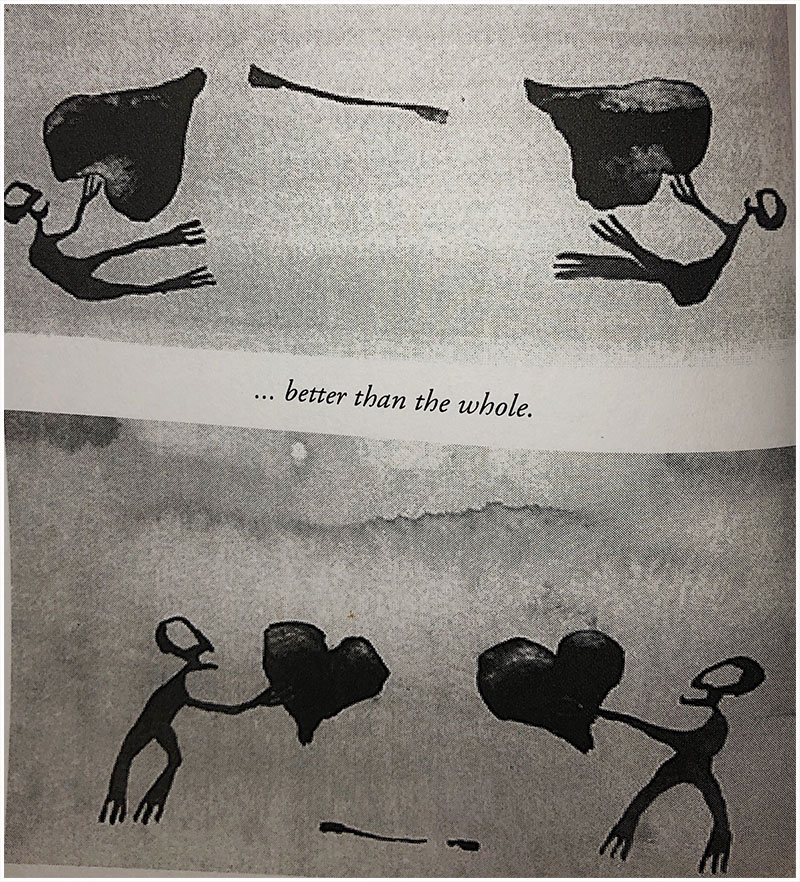
When your personal world – your professional portrait, familiar processes at home and work, predictable market trends – breaks apart, take comfort in the fact that there are always pieces left. Don’t discard those pieces; they are parts of you. Take them and play with them. Put them together to create a new picture of the change in you — a you collage.
To do that, take a giant step in the direction of change: Put your brain in neutral. Of course, that’s hard to do. Your brain does not normally recognize commands to go into neutral mode because it makes little sense of the attempt. With your brain in neutral, there are no thought patterns being created, and the brain is a pattern-loving organ. Your thinking self yearns to make sense of events, people, and opportunities; it wants to reason its way out of an economic ditch, a catastrophic relationship, or a job that sucks.
Putting your brain in neutral does not mean “not thinking.” It means selectively thinking about things that, when viewed from the perspective of your personal or professional life, are “neutral.”
One manager confides that her personal neutral mode consists of closing her eyes during a quiet moment and concentrating on a single thought: A turtle walking at the edge of a tranquil pond. In a personal form of meditation or bio-feedback, the woman simply takes a minute or less and “walks” the turtle in her mind – silently repeating the personal mantra, “Turtle, turtle, turtle,” the silent words matching each imagined step. This form of “non-sense” calms and relaxes this particular manager, enabling her to put her creative brain in neutral, giving herself a refreshing pause.
It’s the paradox of non-sense. Through this neutral process, or whichever one you choose, it’s possible to direct your brain back to Square One, then take off again to find to new patterns and conclusions. Now is as good a time as any to explode yourself with mental dynamite and reinvent you. It’s the perfect time for reinvestment of creative energy, setting new goals, dreaming new dreams, strengthening your personal will, and reorganizing your personal organizational structure to find positive uses for those tired, old, broken and scattered pieces of the s of your yesterday.
When things break – in your personal life, in your job, in the market – huge amounts of negative and positive energy are released. That energy has to go somewhere. You choose where to direct that energy…and when. Doesn’t it make sense to use it to enhance the positive side of your life?
That’s the premise and reason for the Circumference of Me: directing stray thoughts into a living, breathing, growing example of how you can change your life through the appreciation and development of a very special personal tool: personal thought leadership.
Take charge of your thoughts. Take charge of your life.
GIVE US YOUR FEEDBACK. CLICK ON “COMMENT” TO TELL US WHAT YOU THINK or use one of the alternative methods for providing feedback.
By George Smith
Truism of this political cycle – The mess just got messier.
In the wake of the report by Special Prosecutor Robert Mueller, the partisan ship the U.S.S. Crapaduck is sailing in shark-infested waters and it’s all hands on deck, line up and walk the plank hand-in-hand singing “We Shall Overcome Because There Was No Collusion or Obstruction.”
The result of the long-awaited report made the Trump Administration giddy for the time being but the course this coarse administration will now follow is destined to be chaos-squared. You know, like what we have witnessed for the past 27 months…only this chaos will be more chaotic, if that is possible.
First, if you think that Mueller and his team of investigative lawyers and technocrats, by not bringing further indictments against Trump associates and/or family members, is wiping his hands of the investigation, you are mistaken. If there is a person in government smarter, more organized and clear of mind in regard to a mission that Mueller…well, I will wait while you ponder just whom that might be.
Knowing the pardon power of a sitting president, Mueller handed off more information, more reams of investigative paperwork and recorded interviews to various state and district prosecutors (Southern and Northern Districts of New York, Washington, D.C., and Florida) than the New York Times runs in a Sunday issue. A president’s pardon power only applies to federal charges; get charged by state prosecutors and you are on your own.
The report and the initial sippy-cup summary from Attorney General William Barr did create an initial Happyness Culture in Trump supporters and at Fox News. But even some Fox commentators spit up some of the Trump wine-flavored Koolaid and acknowledged the president and others are not yet out of legal troubles.
The House set one tone of bipartisanship by voting 410-0 (20 members did not vote) to have Barr release the entire report. In the Senate, Lindsey Graham killed a similar vote by requesting the FBI release information about the investigation into the Hillary Clinton campaign.
(Uhhh, Sen. Graham, Hillary Clinton lost the election; your side won. Your
party investigated Clinton when she was secretary of state multiple times for
multiple reasons and never laid a hob-nailed boot on her. Give it up, already!
Clinton is a dead horse and you are still beating it to distract from the
current administration issues. Stick with the issue at hand…the Mueller report
and should it be made public or not.)
I am amazed that after the Democrats rolled up the House countin the midterm election that Republicans started pleading with them to work on bipartisan issues. These are the same Republicans who, for the past eight years or more have told congressional Democrats to pound sand and “let the big dogs eat.”
Now the food is in the other bowl in the House and Republicans in the lower chamber are feeling neglected and brow-beaten.
It would behoove every member of Congress to remember the lessons of the last few years: Be careful how you behave when you are in power because when you lose the majority (and you will at some point), expect to be treated like you treated those in the minority when you were big hog at the trough.
It’s not the way our government is supposed to work, but dysfunction breeds dysfunction and everyone suffers, especially the people for whom the elected officials are supposed to be working.
GIVE US YOUR FEEDBACK. CLICK ON “COMMENT” TO TELL US WHAT YOU THINK or use one of the alternative methods for providing feedback.
 iEXPOSED.us Blog
