For most of my working career, the dictates of corporate employment took me to duty stations a great distance from home. Those absences seemed like exile, serving only to make me long to return to the place I had left.
True to this need for reconnection, I reserved one week a year to revisit my insatiable mistress; fishing and frogging the bayous and main waters of East Texas’ Caddo Lake. In the course of those years I took many of my friends there. Introducing them to the lake was like showing off some cherished personal belonging. Later, I began to regret my generosity. Many of my guests assumed the same level of ‘ownership’ that I held and began including their other friends. There was something about the pristine wildness and the rare beauty of the Spanish-moss tapestries that made me selfish. I did not like others losing their hearts to the lake as I had mine.
Caddo holds a special place in our state’s history. After its peaceful days as habitat for its namesake Caddo Indians, the lake was never again allowed to rest. Spanning decades, man’s ego devised many plans for this, the largest natural lake in the state. Some of the schemes were grandiose, some just folly. Steamboats once ploughed the waters from New Orleans to the port of Jefferson, serving as an important waterway from the south. Much later there followed private development of homes and businesses to support the growing popularity of recreation. Perhaps its heyday came in the 1950s, when there were few competing lakes. Norman Rockwell-modeled anglers in expensive outfits and wicker creels traveled great distances to enjoy Caddo’s unique character. Lodges and campgrounds were built to complement its beautifully rustic state park. The lure of the cypress and moss-framed scenery brought tourists by the carloads. Some visitors came and went in a single day. Some stayed a lifetime.
Thankfully, the sanity of time prevailed over these pressures and most dreams of aggressive development were one by one subjugated. But even today, with the adjoining property pending protection as a refuge, there still stir controversies over the lake’s purpose. There are those who wish it to enjoy a natural evolution. Others want to tamper with its heart to artificially serve special interests such as industrialization and water exploitation. Sadly, the squabbles about claims, ownership and rights of determination may go on forever.
Like some say about the state of Texas itself, everything at Caddo Lake is bigger and grander than anywhere else. It’s true of the nesting birds, its arm-girth moccasins, the spring and fall crappie runs, and especially true of the prized frogs that reach extraordinary size in its secretive backwaters. In keeping with this theme of grandeur, such was…
The Storm
It was daybreak on a May morning that was forecast for scattered showers. As I sat on the pier with cane pole in hand, mountains of green-black clouds began to march menacingly at me from the North. Their darkness gave the scattering egrets an eerie contrast, like Styrofoam sailing against black velvet. At the bottom of the approaching curtain was a hundred-foot wall of churning sky, rolling like yesterday’s crawfish-boil. The wind brought a sudden chill, banishing the warmth of the yellow sunrise just past. Webs of electricity began to lace the clouds together, emissaries of St Elmo himself.
In an instant, campground tents were billowing like towels pinned to a clothesline. Coffee pot lids joined potato chips as impromptu airborne missiles. Campers still in nightclothes were scrambling, as would ants disturbed by a sudden exposure of their hiding place. Then came awesome arrays of cloud-toearth lightning, streaking like tracer bullets. Their brilliance illuminated the darkness to reveal a submissive heaven, engorged with rain and stones of ice. Random blasts of thunder trailed the lightning, crashing like the crescendo of a dozen angry kettle drummers.
Now poured a merciless torrent, cascades of water from a bottomless urn. I scuttled to the safety of the steel and cement canopy beneath Big Cypress Bridge. Golf-ball hail began to pound my new pickup truck, a weather-sin I could not forgive. I bolted for the truck, hoping to move it under the cover. I was quickly driven back. All things of man must relinquish their mastery, at least for this moment.
It ended as suddenly as it began, the storm losing its potency like the anticlimactic whimper of an extinguished Roman candle. I stepped out from under the bridge into a freshly washed day. Soon my stunned camping comrades joined me and we stared out over the water. A carpet of steam stirred gently across the now-placid lake, rising like the sweet vapor from freshly baked bread on a morning windowsill. Suddenly the wonderment all fit; this place, its history, the wildlife, and now this humbling, terrible storm.
It was heaven’s smorgasbord with melded recipes that contrast awesome power with the beauty of creation.
No, I thought, this place and its purpose must not be altered. Somehow we must always be reminded that we are merely overnight guests.
* * *
The author’s three collections of short stories, Tailwind, Odie Dodie, and Riders of the Seven Hills are available at all traditional booksellers. Copies signed by the author
USS Thresher (SSN-593) … On 10 April 1963, Thresher sank during deep-diving tests about 220 miles (350 km) east of Boston, Massachusetts, killing all 129 crew and shipyard personnel aboard in the deadliest submarine disaster except for the French submarine Surcouf (130 crew lost).
Given the fact that this submarine was going out on its first dive to test depth, well over 100 shipyard personnel would be on board plus 129 crew. The Thresher’s loss of life was far greater than that of the Surcouf.
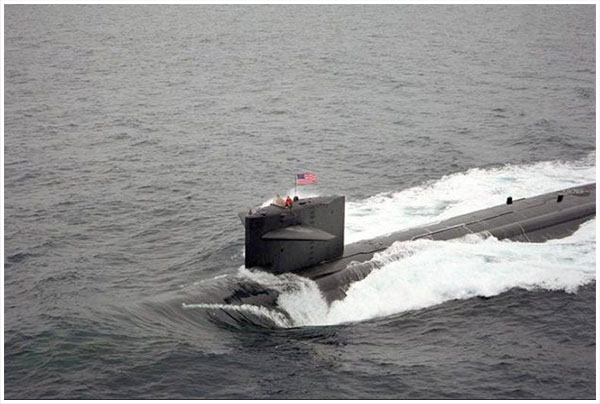
In the summer of 1968, I was preparing to take my first dive on a submarine. I was going to go to sea on the USS Permit (SSN-594) and I had no idea what to expect.
The USS Permit became the lead ship of her class of submarine when the former lead ship, the USS Thresher, was lost.
The submarine was scheduled to depart Mare Island on a Monday. The previous Friday all the shipyard personnel who were scheduled on this sea trial were taken to a conference room and shown a film on how to use the escape hatch to exit a disabled submarine. It was a detailed film covering each step a person must take to exit the submerged vessel.
After the film ended the instructor said that the greatest depth someone had successfully executed this procedure was 400 feet. He also said the depth of the water where we would be diving was well over 1000 feet. I did not find this comforting.
That weekend my wife and I went camping. I would like to say that I did not give my first dive a thought during that weekend. But I don’t lie well. I gave it a lot of thought. I did not know what to expect.
At noon on Monday I was climbing down the ladder into the torpedo room on the Permit. Shortly after that the hatches were closed and we were off on our 12-day adventure.
Attack submarines are designed for a crew of about 125 people. On the initial sea trial there are over 100 additional shipyard people on board. This is because after undergoing an 18-month overhaul it is expected that the ship will encounter some problems on the first dive, so you have to have wrench-turners, electricians, and all the other trade people to fix minor problems while the sea trial is underway.
Since there are no bunks for these 100 or so people, the torpedo room becomes a dorm for the yardbirds (the sailor’s term for shipyard workers). Submarines going out on the first dive do not carry weapons; therefore, the torpedo skids are empty. Bunk mattresses are thrown over the torpedo skids. A person can sleep on these mattresses in the sleeping bag they brought on board. Since there is not nearly enough space for 100 mattresses, people must “hot bunk.” One person gets the torpedo skid for 8 hours, then they get up and a second person takes the space. Eight hours later a third person gets his turn. This routine continues for the duration of the sea trials.
Attack submarines are small compared to surface ships and even ballistic missile submarines so there is no place to sit when you are out of the rack you either stand or use your sleeping bag as a stool.
Because there are many more people on board than is normal, the Navy turns the shower stalls into food lockers. There were no complaints about not being able to shower for 12 days because on every submarine that I was ever on the food was excellent. It is amazing what the crew can do in a small cooking space.
The biggest irritant I found on board was smoke. In 1968 smoking was allowed in all compartments. Since sea trails are boring because there is nothing to do if you are not working, which is most of the time, people smoke a lot. A blue haze hangs over the torpedo room for the duration of the sea trails.
There is one source of entertainment – making fun of the rookies on board.
I was no exception.
When I got down into the torpedo room, I found that the old pros had already begun staking out their spaces on the torpedo skids. I thought I was very smart when I found a stainless-steel surface that was about three feet behind a torpedo tube. It was unoccupied so I staked it out by unrolling my sleeping bag. In retrospect, I guess it was not taken because there was no mattress, and no one wanted to sleep on a stainless-steel surface. At 20-something I could sleep anywhere so I did not see that as a problem.
When you are on a first sea trial many tests are run on the surface before the submarine makes a dive. One of the surface tests is to fire water slugs from all the torpedo tubes. At some point during the first 24 hours they ran this test. I was lying in my sleeping bag directly behind one of the torpedo tubes when they began the test on that tube. When they fired the first water slug, a seal on something directly in front of me failed. Instantly a 1/8” spout of water started shooting out and scored a direct hit – on my forehead. Unfortunately, I was zipped in my sleeping bag and could not move to get out of the way. Did anyone come to my rescue? No! Everyone in the torpedo room began laughing as they watched me trying to free myself from my sleeping bag. Fortunately, a couple of sailors came running over and began deflecting the water into a bucket until someone could get in position to fix the leak. That was my baptism on aboard submarines.
Of course, the most interesting test is the first dive to test depth. In 1968 the test depths for submarines were classified. I will treat it as classified today since I don’t know if it is still classified. I was told that when asked the question you could say it is greater than 1000 feet.
On the first drive the Captain does not vent the main ballast tanks and go directly to test depth. He does it 100 feet at a time. When the Captain reaches 100 feet he holds the boat at that depth. The crew inspects all the compartments for leaks. After all the compartments report no leaks the Captain takes the ship down another 100 feet and the search for leaks is repeated. This process is continued until the boat reaches test depth – the maximum depth at which the boat is designed to operate.
When the Permit started its first dive to test depth someone tied a rope across the expanse of the torpedo room. As the submarine gets deeper the outside water pressure increases and begins to compress the pressure hull which means the once tight rope begins to sag. Of course, this is done to make the trip more meaningful for the rookies on board.
One sobering fact that I was told is that if there is a ¼” diameter leak in the main seawater system you have less than a minute to stop the leak or you will be unable to recover the ship. That tells you how much pressure there is on the hull at test depth.
During most of the duration of the sea trial I sat and did nothing. Finally, on the last day and the last dive I got to do my thing. The boat conducted a trim dive and I got to capture all the data from the test.
The Captain took the submarine to 100 feet depth – a depth where the boat is not affected by wave action on the surface and the water pressure is too low to change the hull configuration. The crew adjusts the water in the variable ballast tanks to bring the boat to a state of equilibrium. Without the prop turning the submarine is stable. It is not floating up and it is not sinking. The ships buoyancy equals the ships weight and the boat is not trimming by the bow or the stern.
With that complete the Captain blew the main ballast tanks, surfaced, headed for the Golden Gate Bridge and Mare Island Naval Shipyard. I spent the next few hours running around the sub taking readings from all the tanks and collecting other data that allowed the shipyard to certify that the ship could drive in all the loading conditions specified by the Navy.
My first trip on a submarine was complete.
I estimate that about 98% of the engineers working at Mare Island never got to ride a ship to sea. I feel lucky that I worked in an organization that allowed me the opportunity to go to sea. I only did this work for a year or so before I moved on to another job, but during that time I got to ride three or four submarines. It was a great experience.
I have great respect for the submariners of the US Navy. I have seen them in action – up close and personal. They have a difficult job but an important job. What they have done and continue to do is invaluable to the security of this country. Many have said that some of their special ops during the cold war kept us out of World War III – read Blind Man’s Bluff.
GIVE US YOUR FEEDBACK. CLICK ON “COMMENT” TO TELL US WHAT YOU THINK or use one of the alternative methods for providing feedback.
I grew up on Marshall Texas’ North Side, a reference to the neighborhoods north of Grand Avenue and beyond the Texas and Pacific Railroad tracks. People said our kind were poor and called us Northsiders. They said we were from the Shoebox Neighborhoods because our houses resembled uniform rows of sameness.
In contrast, Southsiders had the fairy-tale houses that dotted areas like Washington Place and Henley-Perry Drive. Here were quaint homes, chalets and bungalows having distinctly varied architecture and amenities that set them apart from the rest of the town. In Washington Place there were homes built entirely of rare petrified wood. Many had stucco alcoves with little statues and plaster carvings. Others had European-style roofs, some having clay tile and some with expensive faux-tile roofs made of metal. Mailboxes were forged of iron and had hand-painted ceramic insets depicting fox-hunting scenes. In the winter the owners decorated for Christmas with a flair that had the rest of Marshall driving past in caravans of awe. It was a storybook-like child’s eye version of a trip through Santa’s home town.
My visits to South Side were seldom, and not by invite. Our family didn’t mingle with Southsiders unless we needed to hire a lawyer or see a doctor. When we were flush with gasoline after payday, we often rode through their neighborhoods and hung our heads out the car window to try and breathe in the wealth. Packards and Cadillacs sat glistening in pea-gravel driveways. I didn’t see any Henry J’s like ours. In backyards I could see brick barbecue pits with forged metal hoods. To the side would be brightly-painted triple-swing sets with Jungle Jims. I bet the kids there shot Roman candles all year long.
North Side boys were late getting bicycles. We didn’t start with a small one and graduate through four or five sizes up to twenty-eight-inchers. We started with the twenty-eight-incher, always second-hand, and had to use a washtub as a step to mount it. For the next few years there would be no way to make it all the way up onto the seat. Burlap sacks wrapped around the top-tube and tied in place with a stocking had to do. Sometimes we had to add wooden blocks to the pedals to reach them. If we fell during our ride, we used curbs or stumps as assists to remount. If there were no curbs, we pushed the bike all the way back to the washtub.
Bikes aside, my favorite activity was climbing. I climbed everything. I sat on top of my garage until the red tin roof got too hot to manage through blue jean cutoffs. I walked the length of my house on the asphalt ridge cap like a circus high wire performer, arms spread out for balance and effect. I climbed the huge sweetgum tree and tossed its burrs toward a coffee can I had positioned on the storm sewer cover below. One point for each basket. At night, that same perch had me shooting burrs with a slingshot toward the Baptist College girls who passed beneath the streetlight. If one hit the mark, they cried out “Bats!” and fled screaming into the night.
At my uncle’s farm in Overton there was a working windmill. Its tail fin spelled the word ‘Aeromotor’ in faded letters. I could climb the cross braces as easy as I could a ladder. So could my uncle’s bird dog Wilbur, a skinny old farm hound that regularly joined me at the crow’s nest platform halfway up. He climbed down like he climbed up. His toes splayed out like a fan to steady himself on the metal angles. Sure footed as a goat, Wilbur was wasted in Overton. He could have easily made sway with John Ringling North.
I admit to having some climbing fears. Sometimes hackles of hair on the back of my neck would stiffen like those wild bristles on a used-up paintbrush. My palms revealed the same lingering cold sensation as when gripping the neck of a soda bottle to hoist it out of its ice cooler. Climbing meant placing one hand on the next rung or brace and keep moving. Rules emerged: Never stop, never ever look down.
The rest at the end of any climbing adventure was always interrupted by that dreaded fear of the trip back down. How did I actually get up here? Sometimes I would swear that some strategically-vital tree limbs had somehow been removed since I last used them. Climbing down was like having forgotten every good move, like being out of body. I would repeatedly swipe my palms down the legs of my jeans to dry them. One hand, then the other. Carefully position each foothold. Footholds on the way down were much more calculated than those of the brisk ascent. The last step was more of a leap, skipping one or two levels. The only means to quickly end the fear was to hasten that happy jolt when feet met earth.
Sometimes at night a group of other climbers joined me downtown to scale the rows of buildings like today’s Spiderman. There were streets where one building nearly touched another and we could traverse an entire block on rooftops. Pigeons scattered like gray apparitions against black canvas as we disturbed their rest. Oddly, we often found empty beer cans and bottles up there. We glanced around nervously. We weren’t the only visitors.
Nader’s Store had several rooftop skylights. Each had a pane that could be opened for emergency ventilation. I opened one, its rusty hinges squealing for oil. In the dimmed store lights I could see rows of shoes on display shelves far below. I dropped a handful of roof gravel down the vent for the discomfort of those trying on shoes tomorrow. I wondered what Nader must have thought. I bet he wrote the shoe company a letter.
Sam Houston School had a metal fire escape that was a chute with a section of covered tunnel stretching down several stories. I climbed it backwards many times on weekends just for the joy of a wax-papered ride back down.
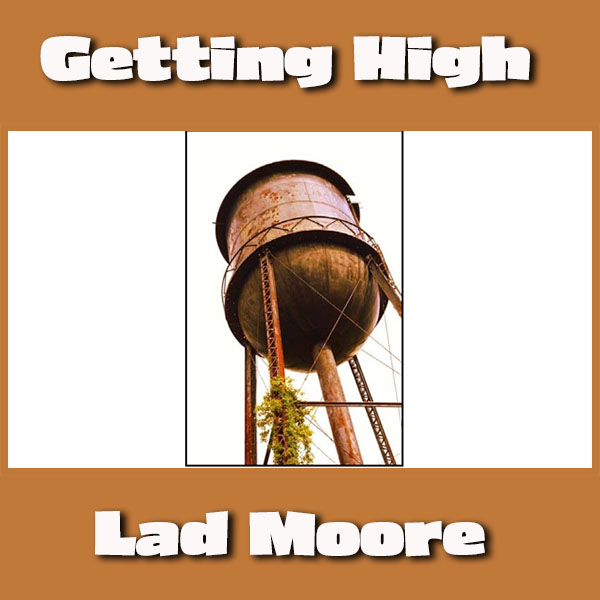
Of all climbs, the cone-topped water tower known simply as The Standpipe was the cosmos of all fear and danger. To fall would be to careen off the hill into the pit that Marshall Pottery used as a dump for sharp pieces of broken pots. Standpipe therefore stood as did Everest, a magnet to the dauntless climber, knowing that such a fall would add severed arms and legs to mere broken bones. But many had done it before me. “MHS Seniors ’55” and “I Love Carol” were emblazoned on the tank’s sides along with the initials of many heroic conquerors. The city water department didn’t even clean the writing off. Standpipe legend was allowed to advertise.
Standpipe must be scaled at night to maximize both drama and covert act. Even so, it would not be uncommon for the odd patrol car to come by, dobbing its spotlight on the tower frame and catwalk. My friend Troy would stay below both as watchman and cheerleader. He was also assigned to remove the body if called upon.
I began my climb with a kiss planted on the tower’s massive outlet pipe, a climber’s bid for good luck. I had a can of spray paint tied to my belt. I chose red, the high school color. I had bought the paint two weeks earlier, fearing that the hardware store man would alert the police to such a purchase and Standpipe would be placed on a prolonged stakeout. The News Messenger headline would read: “Alert Clerk Foils Latest Standpipe Attempt. Climber Sent to Reform School.”
Seven or eight feet into the climb, one had to navigate a barbed-wire barrier installed to deter the weak and easily discouraged. The wires had been spread apart enough times that they had become spacious and I easily passed between them. Troy gave me my first cheer but I didn’t look down. The ladder welds had broken in a few places and the sides quivered more than I liked. In a few spots it wobbled enough to clank, triggering a “Shhh!” from Troy below.
I brushed away a bird’s nest and dirt and debris fell on my face and into my eyes. I locked my leg through the back side of the rung and clamped the toe of my shoe on the next rung below. That move allowed me the necessary comfort and insurance to free one arm and wipe my eyes on my sleeve. I blinked over and over. Irritant tears began to well and eventually a muddy stream stained my face.
Soon I reached the pinnacle; a catwalk that encircled the tank like a metal garter belt. I crawled from the access hole onto the flat surface and lay still. I could see Troy sitting on the grass with his flashlight illuminating his face. He said something I couldn’t understand. I continued to lie there and catch my breath. My chest heaved up and down enough that it felt like pushups. I turned onto my side. Gripping the braces on the catwalk, I slowly stood upright. My fingers clung to the rail as though fused to the metal.
A twinkling panorama stretched out before me. I let go the rail long enough to wipe my eyes with my shirttail, removing the last of the bird’s nest. To the south I could see a bright red haze. It was the glow of the rooftop neon letters spelling Hotel Marshall. In the distance to both the left and right blinked twin radio towers. One was KMHT. The other one? Maybe Wiley College had a station. The towers’ red pulses were ironically timed to the pace of my breathing. At the ten o’clock position I could see the alternating green and white waves of the Marshall Airport beacon. Directly in front I could make out the shiny dome of the old courthouse. Farther right at four o’clock was a cluster of lights knitted closely together. Baptist College?
Above me unfurled a mosquito net of stars, brighter than any other time I had looked into the heavens. Was I just closer to them? While looking up I saw a blank spot on the tank’s east side. As high as I could reach I painted my initials there, followed by the date. Then I noticed something curious. Some of the painting was well above mine, reminding me of six-foot-four Raymond Craig. Raymond played varsity basketball and could hurl himself off the rim like Tarzan from a vine. Even Ray couldn’t reach that far up. It had to mean just one thing. Certain others before me had stood on top of the catwalk handrail to paint! I regretted having already put my mark there; others might see mine as less legitimate. I contemplated a re-do but only briefly. A return of neck hair like a Mohawk and palms like ice blocks quickly tamed my zeal. To seal this welcome rush of good sense, I let the can of paint fall to the ground.
“Dang! You dropped your paint,” said Troy. “No way can I throw it up that far.” “Deed is already done,” I said. Another cheer from Troy.
I made my way back to the firm red clay. My legs were trembling like I imagined an earthquake might cause. I felt weak all over. Not from the climb, but from an ebb of fear flowing out of me.
The next day Troy and I rode over to Standpipe. I felt the chills of pride and opened a wide smile meant solely for me. My initials were more prominent than I had hoped. Troy beamed at me like I was a brother just home from the war. It was a look that mixed awe with respect.
Our neighborhood slowly changed. First the T&P railroad shops were razed. Then the old East Avenue Viaduct was toppled by an over-height railcar crane and never rebuilt. The Standpipe Tower outlasted almost everything until a few years ago when the city tore it down for no reason whatsoever.
The destruction of Standpipe removed yet another monument to the legitimacy and honor of North Side. There are damn few left.
* * *
The author’s three collections of short stories, Tailwind, Odie Dodie, and Riders of the Seven Hills are available at all traditional booksellers. Copies signed by the author may be obtained by contacting him directly via pogo@shreve.net or by accessing his web page at: http://laddiemoore.blogspot.com/
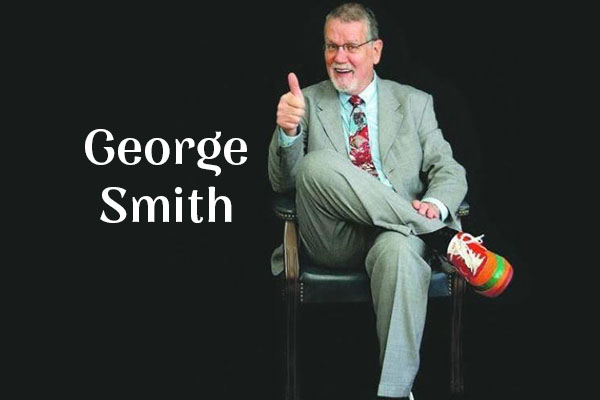
Now, for one night only, see him as never before: Smith has reinvented himself as The World’s Oldest Sit-down Comedian.
He will give two dinner performances at 5:30 and 8 p.m. Saturday, December 14 at the Blue Frog Restaurant, at Blissmore Valley Ranch, 208 North Washington in Marshall.
Seating is limited and reservations are required. Call 903-923-9500 for tickets. A percentage of ticket sales will benefit the Marshall-Harrison County Literacy Council.
Former publisher of the Marshall News Messenger (1982-1992) Smith conceived and developed the FireAnt Festival and, with J.C. Hughes Jr., founded the Wonderland of Lights.
Smith said, “Most folks who know me know I like to tell stories. These performances allow me to tell stories about a variety of humorous events without being interrupted by others who think they have something more important to say.”
He said, “I’m older now and my feet hurt so I am, truly, a sit-down act. I will tell stories about the newspaper business, about my decade in Marshall (without embarrassing anyone but myself) and will share some funny stories from my soon-to-be published novel, “Growing Up Mostly Happy”, subtitled “It Takes a Village to Raise an Idiot”.
Smith has been a frequent storyteller on the PBS radio series “Tales of the South”, and was a regular “Amateur Night” participant at a Seattle comedy club while serving as executive director of the Washington State Newspaper Publishers Association.
Smith said, “I want all my friends and some of my friendly detractors to show up for a great meal and fun and frivolity It will be an old-fashion homecoming with laughs galore.” Copies of Smith’s “Uncertain Times,” a southern humor mystery and romance novel set in Uncertain, Texas, will be available for sale at the shows.
GIVE US YOUR FEEDBACK. CLICK ON “COMMENT” TO TELL US WHAT YOU THINK or use one of the alternative methods for providing feedback.
Texas Shakespeare Festival Foundation urges patrons and
community members
to support the outstanding work of the Texas Shakespeare
Festival (TSF)
by buying a raffle ticket for trip-for-two to Italy
Kilgore, TX
– In this last week
of the exciting 2019 summer season of the Texas Shakespeare Festival, the Texas
Shakespeare Festival (TSF) Foundation urges patrons and community members to
support the work of the TSF by participating in the annual TSF summer raffle.
This year’s
raffle is a trip-for-two to Florence, Italy. Raffle tickets are $100 each, with
only 350 tickets being sold. The estimated value of the trip is $6,000,
including airfare and hotel. The raffle drawing will take place during
intermission of the final performance of the 2019 TSF season on Sunday, July
28. Ticket holders do not need to be
present to win.
A video with additional information about the Italy raffle and a link to the box office to purchase a ticket is available at http://www.texasshakespeare.com/.)
The Texas
Shakespeare Festival, which was founded in 1986 by Artistic Director Raymond
Caldwell, is now in its 34th consecutive season and is the only professional
theatre in East Texas.
TSF
performances take place in the Van Cliburn Auditorium in the Anne Dean Turk
Fine Arts Center on the Kilgore College campus in Kilgore, Texas.
The
entity hosting the Italy trip raffle is the Texas Shakespeare Festival (TSF) Foundation
which is now in its 25th year of providing fundraising and volunteer
support, along with the TSF Guild, for the Texas Shakespeare Festival.
The TSF
Foundation was incorporated in 1994 as a not-for-profit 501c3 and is managed by
a 19-member volunteer Board of Directors which is comprised of civic, business,
and community leaders from throughout the East Texas region. The Foundation’s sole purpose is to raise
funds and provide volunteer services and community outreach to support the work
of the Texas Shakespeare Festival and to provide a solid base to continue to
build for the TSF’s future.
Christina
Anderson, President of the TSF Foundation Board of Directors, shared, “The TSF
Foundation is very honored to support the important cultural, artistic, and
educational work that the Texas Shakespeare Festival does for our East Texas
region and beyond. Since 1986, the TSF
has provided superb, live productions of masterpieces, musicals, and other
great plays produced and performed by theater professionals who travel from New
York, Los Angeles, and throughout our nation each year to work in the summer
festival in Kilgore.”
Ms.
Anderson added, “We’re also very grateful to the individual and corporate
contributors who have supported the work of the TSF and the educational TSF Roadshow
for more than three decades, plus the countless volunteers, as well as other
East Texas foundations who have donated generously, including the Rosa May
Griffin Foundation which has supported the Texas Shakespeare Festival since its
inaugural year.”
Ms.
Anderson also underscored the deep appreciation that TSF and the TSF Foundation
and Guild have for the strong, valued, mutually-beneficial partnership they
have with Kilgore College through these many years.
The Texas
Shakespeare Festival is truly a model for a successful collaborative
effort. TSF is a collaborative effort
between the Festival, the TSF Foundation and Guild, and Kilgore College.
Kilgore
College, where the TSF is in residence, donates financial and in-kind
contributions (including use of the Van Cliburn Auditorium) which amount to
approximately 30% of the cost of the TSF each year.
The TSF
Foundation raises money to support the operation of the TSF and the Guild, through
its dues and volunteers, takes care of the hospitality of the acting company
while they’re in Kilgore. The work of the TSF Foundation and Guild accounts for
another 30% of the annual cost of the Festival.
The
remaining 40% of the revenue needed to produce the summer Festival each year is
made through ticket sales and programming by the Texas Shakespeare Festival
itself.
Dr. Brenda
Kays, President of Kilgore College, echoed the sentiment with regard to the
collaboration between Kilgore College, TSF, and the TSF Foundation and Guild. “Nothing worth achieving is ever achieved in isolation,” Dr. Kays
shared. “Partnerships have allowed the Festival to continue its rich tradition
of excellence and to flourish. Proof that the Texas Shakespeare
Festival is a valued component of the East Texas Arts Community lies in the
extraordinary collaboration that exists between the College and the TSF
Foundation and Guild.”
Funds
raised by the TSF Foundation and TSF are used not only to assist with
productions, but also to purchase needed equipment that is used by both TSF and the Kilgore
College Theater Department. In addition, costumes, props, and scenery made by the
TSF professionals each summer are frequently used by the Kilgore College
Theater Department for their productions during the school year.
Mathew
Simpson and Meaghan Simpson, Associate Artistic Directors for the TSF, also
serve as adjunct instructors of Kilgore College theater courses and guest
directors for KC theater productions. They have also reinstated and expanded
the very popular TSF Roadshow. The TSF
Roadshow provides valuable educational experiences and performances for more
than 17,000 students in elementary and secondary schools throughout Texas. Working with these students, in connection
with the Roadshow, assists Kilgore College with recruitment possibilities.
The
summer raffle is just one of the fundraising activities spearheaded each year
by the TSF Foundation. This year’s Italy
trip is co-sponsored by A.P. and Susie Merritt of Kilgore and Richard and
Christina Anderson of Marshall.
Raymond Caldwell, Founder and Artistic Director of the Texas
Shakespeare Festival, shared, “The Festival could not survive without the vital
support of Kilgore College, the TSF Foundation and Guild, and our loyal
patrons. This year’s raffle for a trip to Italy is a major fundraiser to help
the Festival accomplish our important annual fundraising goals. We thank
everyone for their support.”
In
addition to the summer raffle, individuals, businesses, and other foundations
wishing to make a contribution to the TSF Foundation throughout the year can
send a tax-deductible donation to the TSF Foundation at P.O. Box 2788, Kilgore,
Texas 75663.
The 2019 Texas Shakespeare Festival summer season continues through July 28, with matinee and evening performances from Thursday through Sunday. Box office (903) 983-8601.
GIVE US YOUR FEEDBACK. CLICK ON “COMMENT” TO TELL US WHAT YOU THINK or use one of the alternative methods for providing feedback.
It is an old axiom, but a business truism just the same,
that shit flows, rolls, or bounces downhill, depending on the individual
consistency and age of said waste.
It’s a fact of business life: You will have unimaginable and
unimaginative chores to do in a corporate environment. There often are tough assignments that nobody wants
to do, but almost everybody has to do.
The avalanches of shit you
will face in business will be awe-inspiring – or downright scary. Learn to
master and manage them, not to be buried by them, and to shovel shit with
efficiency and aplomb. Learn to look over and past them to the emergent light
on the horizon.
Lesson 1: Accept
shoveling shit as a rite of passage. Know that the company CEO was a Supreme
Shit Shoveler in his day. Follow his or her example: Do your duty, shovel to
the best of your ability, and move on.
Lesson 2: It’s
impossible to pick up a turd from the clean end. Grab it with both hands and
dispose of it as quickly as possible.
GIVE US YOUR FEEDBACK. CLICK ON “COMMENT” TO TELL US WHAT YOU THINK or use one of the alternative methods for providing feedback.
Ambition is like a ladder. Without two strong sides and rungs arranged at regular intervals, chances of a safe climb are very slim indeed.
Young managers want to scamper up the ambition ladder. The faster the pace, the better they like it. Seasoned managers, either patient and not in an unrealistic hurry to be put in a position that might expose their weaknesses, or who have decided later in their careers to tackle the climb, use each rung as a learning experience to assist them on their vertical climbs in their chosen professions.
Is there one route that is best? To each his own.
But on principle, each rung of a career ascension should be used as an opportunity to learn about your company and yourself.
A career should not be judged by how fast a person gets to a certain position, but what the person brings to the corporate table when placed in a decision-making role.
Whatever your pace, make it your ultimate goal to learn how to manage in a way that realizes the most efficiency and effective benefits for your company.
Find the company that you know is a good fit. Secure the ladder that fits your personality, abilities, and goals.
There’s no elevator to the top of the ladder. It takes hard work and you need to be in shape to climb it.
GIVE US YOUR FEEDBACK. CLICK ON “COMMENT” TO TELL US WHAT YOU THINK or use one of the alternative methods for providing feedback.
Just like the whaler who is so proud of his vigilance for his prey, all the time unaware that he has been plying his trade from atop a humpback, too many managers firmly believe tunnel vision is an admirable trait, useful for every project.
It never has been, is not today, and never will be. Tunnel vision — an accepted way to see projects that must be viewed and worked on with blinders in shower-curtain position — is a specialized tool for a specific job and only should be put into action on special occasions of the short-term variety.
A seldom-recognized trait of great managers is the ability to focus on tasks at hand while at the same time developing the peripheral vision necessary to watch out for unexpected opportunities.
That’s the hard part about being a see-all, do-everything manager: keeping focused on critical, short-term tasks while maintaining the secondary focus required to look around corners, over hillocks, behind obstacles, and past the horizon.
Focus, yet see beyond the obvious.
See unseen opportunities while keeping your focus.
Be able to shift visual and cerebral focus on command, yet never lose sight of the task at hand. It’s a trick that the world’s best have mastered.
It can be a difference maker between being successful today or being successful today and tomorrow.
GIVE US YOUR FEEDBACK. CLICK ON “COMMENT” TO TELL US WHAT YOU THINK or use one of the alternative methods for providing feedback.
Great managers constantly search for ways for their efforts and the efforts of people in their department to help other departments and managers succeed for the good of the business.
Good managers become great managers by building coalitions through mutual respect, and offering assistance on common projects. Building a strong partnership on a single project can help you climb innumerable rungs on your career ladder.
Seeking a successive string of promotions and title enhancements is a sign of a focused manager. Managers only interested in bigger titles may get them, but they might be the only goals they attain, at the cost of greater and more valuable goals, like gaining deserved responsibility and respect through your ability to address challenges responsibly. Do that, and your titles will come.
A title is only as good as the character of the person who holds it.
Great managers never let their egos, turfs or quests for titles interfere with the primary goal of corporate wellness.
A mixture of a strong grasp of reality and a helpful spirit pours the foundations of strong corporate careers.
GIVE US YOUR FEEDBACK. CLICK ON “COMMENT” TO TELL US WHAT YOU THINK or use one of the alternative methods for providing feedback.
30 May 2019: On June 11 my wife Deloris and I will be in Greece. This will be her first trip to Greece. I will be returning after 40 years. I know it was 40 years because:
The Three Mile Island Unit 2 reactor, near Middletown, Pa., partially melted down on March 28, 1979. This was the most serious accident in U.S. commercial nuclear power plant operating history, although its small radioactive releases had no detectable health effects on plant workers or the public.
While this was happening in the United States, I was on a cruise ship that took me from the Canary Islands, into the Mediterranean and finally to Greece.
During that trip we visited many places but the place that still stands out in my mind is Mykonos. I have always felt I needed more time in the Greek Islands. That is what motivated me to book a return trip to Greece and the Aegean Islands. They say, “you can never go back – it is never as good the second time.” We are about to find out.
GIVE US YOUR FEEDBACK. CLICK ON “COMMENT” SECTION AT THE END OF THIS ARTICLE TO TELL US WHAT YOU THINK or use one of the alternative methods for providing feedback.




 iEXPOSED.us Blog
