Just like the whaler who is so proud of his vigilance for his prey, all the time unaware that he has been plying his trade from atop a humpback, too many managers firmly believe tunnel vision is an admirable trait, useful for every project.
It never has been, is not today, and never will be. Tunnel vision — an accepted way to see projects that must be viewed and worked on with blinders in shower-curtain position — is a specialized tool for a specific job and only should be put into action on special occasions of the short-term variety.
A seldom-recognized trait of great managers is the ability to focus on tasks at hand while at the same time developing the peripheral vision necessary to watch out for unexpected opportunities.
That’s the hard part about being a see-all, do-everything manager: keeping focused on critical, short-term tasks while maintaining the secondary focus required to look around corners, over hillocks, behind obstacles, and past the horizon.
Focus, yet see beyond the obvious.
See unseen opportunities while keeping your focus.
Be able to shift visual and cerebral focus on command, yet never lose sight of the task at hand. It’s a trick that the world’s best have mastered.
It can be a difference maker between being successful today or being successful today and tomorrow.
GIVE US YOUR FEEDBACK. CLICK ON “COMMENT” TO TELL US WHAT YOU THINK or use one of the alternative methods for providing feedback.
Great managers constantly search for ways for their efforts and the efforts of people in their department to help other departments and managers succeed for the good of the business.
Good managers become great managers by building coalitions through mutual respect, and offering assistance on common projects. Building a strong partnership on a single project can help you climb innumerable rungs on your career ladder.
Seeking a successive string of promotions and title enhancements is a sign of a focused manager. Managers only interested in bigger titles may get them, but they might be the only goals they attain, at the cost of greater and more valuable goals, like gaining deserved responsibility and respect through your ability to address challenges responsibly. Do that, and your titles will come.
A title is only as good as the character of the person who holds it.
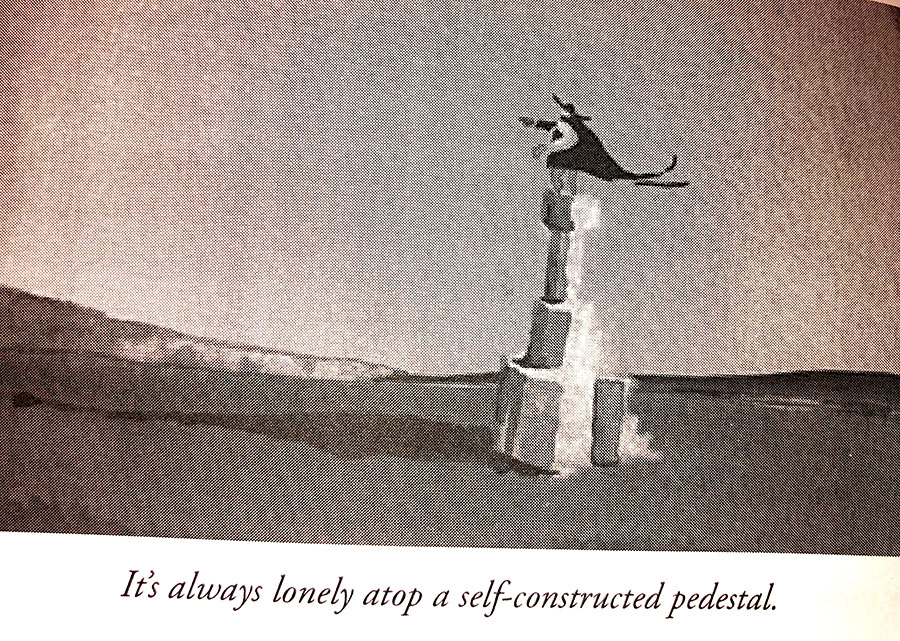
Great managers never let their egos, turfs or quests for titles interfere with the primary goal of corporate wellness.
A mixture of a strong grasp of reality and a helpful spirit pours the foundations of strong corporate careers.
GIVE US YOUR FEEDBACK. CLICK ON “COMMENT” TO TELL US WHAT YOU THINK or use one of the alternative methods for providing feedback.
30 May 2019: On June 11 my wife Deloris and I will be in Greece. This will be her first trip to Greece. I will be returning after 40 years. I know it was 40 years because:
The Three Mile Island Unit 2 reactor, near Middletown, Pa., partially melted down on March 28, 1979. This was the most serious accident in U.S. commercial nuclear power plant operating history, although its small radioactive releases had no detectable health effects on plant workers or the public.
While this was happening in the United States, I was on a cruise ship that took me from the Canary Islands, into the Mediterranean and finally to Greece.
During that trip we visited many places but the place that still stands out in my mind is Mykonos. I have always felt I needed more time in the Greek Islands. That is what motivated me to book a return trip to Greece and the Aegean Islands. They say, “you can never go back – it is never as good the second time.” We are about to find out.
GIVE US YOUR FEEDBACK. CLICK ON “COMMENT” SECTION AT THE END OF THIS ARTICLE TO TELL US WHAT YOU THINK or use one of the alternative methods for providing feedback.
Another major failing among mid-level managers is an inability to see beyond their own boundary lines. Thinking, “I am in charge of this project, and I will control it,”is simply wrong-headed. Each department is a part that exists to assist other parts so the corporate engine can runsmoothly and efficiently.
Turf protectionism was common among ancient warlords and still is practiced by nations or regions run by tribal chiefs. There are no successful companies among which turf warfare is tolerated. There is nothing worse in a business than a “virus” – a virulent strain of egotism – created by the ministrations and manipulations of quarreling corporate warlords.
Managers who adhere to the archaic practice of turf protection, to the detriment of the company, will not be around to see necessary changes unfold.
While “turf” is strictly a boundary issue and a sincere bugaboo in the constant search for corporate success, a manager’s “territory” should be constantly scrutinized for expansion possibilities – not in the sense of “securing more territory” to feel important, but to improve the internal processes that benefit the company. In other words, how can one department help other departments in ways individual managers may not have even contemplated? And how do you accomplish that without offending the boundary issues of other managers?
Overtures must be presented in terms of mutual consideration and benefit.
“I was thinking about that interesting project you mentioned last week and how it could help the company. What if my department assisted you by . . . ?”
There is an example of the absolute best that communication and camaraderie have to offer: A word of praise, followed by an offer of assistance.
Real life. Real, positive results.
If you want to expand your territory, do it for the right reasons. If you just want to be in charge of “more”simply to expand your turf, buy grass seed.
GIVE US YOUR FEEDBACK. CLICK ON “COMMENT” TO TELL US WHAT YOU THINK or use one of the alternative methods for providing feedback.
It’s time to do an itemized check of your professional tool belt.
Education (regular classroom or Street Smart U.)? Check.
Experience? Check (Or soon will have, or working on it).
Strong work ethic? Check.
Ability to work well with others? Check.
Ready acceptance of any task, and ability to deliver satisfactory results on time and under budget? Check(When circumstances allow).
So, what’s the problem? Why does your personal corporate vehicle seem stalled,or your fast-track career slowed down, like a tractor-trailer rig straining up a mountain highway? Are your beliefs realistic about where you are and where you should be? If you are young, eager, and impatient, probably not. If you are older, and have started questioning your abilities and blaming others for your status, another glance at the mirror will show you the problem.
Have you done everything you can do to get where you want to go in the time you wanted it to take to get there?
What do you think is the No. 1 tool that every great manager has at the ready at all times?
A great education and a high GPA? Can’t hurt, but in some cases your supervisor may have made it on a high school diploma.
Superb work ethic? Good, but that’s a given for up-and-comers.
Willing to do whatever it takes to get the job done? Okay, but see “Superb work ethic.”
Profit-oriented? A good tool to have in the belt, but it’s a Catch-22. You can’t get what you don’t have without having the wherewithal to get it. How do you get the experience you need to be profit-oriented without getting the experience?
Good communication skills? Absolutely essential, but not the main driver.
Brown-nosing without getting your proboscis dirty? Oh, shut up!
Well, what about time management?
One of the hardest things for managers to learn, and to learn to use to maximize efficiency and productivity is time management.
Let’s accept that there’s not enough time to do all the tasks assigned to you. On top of that, you get seventy to eighty e-mails a day, each requiring time and many demanding even more time. If you don’t take the time to read and answer them, then you’re a jerk, a slacker, a goldbrick, a drone waiting around for retirement, or have a colossal don’t-give-a-damn attitude. If you are a high-level manager and don’t make the time to answer e-mail queries, you are a snobbish jerque. So you lose time to e-mails.
But think: Your e-mail volume is just a percentage of what your boss gets, and his or hers is just a percentage of what the next level of management gets, and so on. If you are swamped with e-mails, that does not bode well for those higher up the corporate ladder.
Still, some great managers make it a conscientious practice to answer every single e-mail from every single employee, every dealer, and every customer or potential customer.
Aspiring managers – those who want to lead rather than perpetually follow – must quickly learn what those great managers know, whether dealing with piles of tasks or e-mails: the not-so-subtle art of time management.
Learn the two “izes”: Itemize and prioritize. Make a list of projects and tasks, prioritize them according to relative importance, and cross-index them to take into account deadlines and available resources. The items you can do quickly, or for which you can do your assigned part and pass on down the line, should be at the top of the list.
And be sure to answer those e-mails.
Here’s why: A president and CEO of a large technology company admits that answering e-mails takes a huge bite out of his workday. But he knows if he wants to be a leader, he has to make time – in a word, prioritize his acknowledgment of the concerns of others – to show people how important he thinks they are.
What could be more important to a leader?
Learn and adhere to the principles of time management in your life and work, and you will control your destiny.
GIVE US YOUR FEEDBACK. CLICK ON “COMMENT” TO TELL US WHAT YOU THINK or use one of the alternative methods for providing feedback.
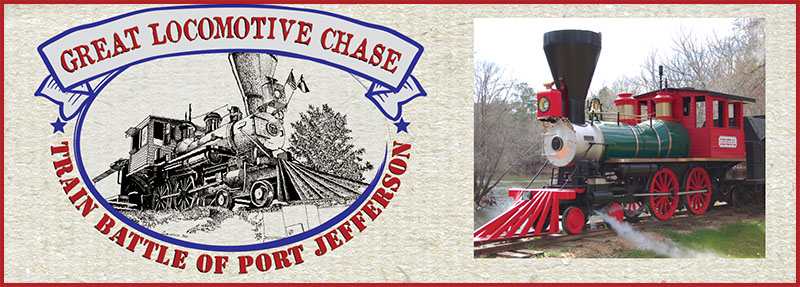
The Historic Jefferson Railway captures the spirit of the
Civil War during Jefferson Historical Pilgrimage & Civil War Weekend May 3,
4 and 5, 2019 by recreating the battle of the Great Locomotive Chaseaboard
a live steam train with soldiers from the North and South. The living history camps along the Big
Cypress Bayou come alive as the cannons fire and the battle rages to gain
possession of the train.
The Great Locomotive Chase and Train
Battle of Port Jefferson will be held on Saturday, May 4, with live steam train
rides departing from the Historic Jefferson Railway in downtown Jefferson at 11:00,
12:30, 2:30, 4:00 and 5:30 and Sunday, May 5 at 12:30.
On Friday May 3, there will be a Day
of Learning for school groups, home school children and parents to draw
attention to the history and romance of the Civil War way of life. This event is also open to the general
public. The Living History Camps will
demonstrate Camp Life and Military Activities and includes an optional train
ride aboard an antique gas-powered locomotive.
The Historic Jefferson Railway narrator tells the story of The Andrews
Raid as the train travels alongside the Big Cypress Bayou. See a gunboat with real live cannons. Visit Diamond Don Gator Pit with seven live
gators and see ruins on the property from the 1800’s.
On Saturday and Sunday, the Train Battle of Port Jefferson joins
the skirmish as a replica ironclad gunboat, the Virginia, fires her cannons on the banks of the Big Cypress Bayou
River. The live steam train will be
pushing a flatcar full of Confederate soldiers firing their cannons on the
soldiers from the north. More than 10
large cannons, artillery and horse-drawn wagons will participate in the Train
Battle.
The gripping tale of The Andrews Raid is the Civil War’s most
fascinating railroad story. Famous campaigns were planned and conducted for the primary
purpose of capturing or destroying railroad lines of value to the enemy. On the
morning of April 12, 1862, the most famous locomotive of the Civil War, the General, was hijacked by the Union
civilian spy, James J. Andrews, and his men. After a nail-biting eight hours
and 87 miles, the Southerners captured the
General, James Andrews and several of his men.
The Merrimack was a Union cruiser, captured by the South in
Norfolk Virginia, and renamed the Virginia. The Jefferson Battle that Never Was will
feature the Virginia, fighting from
the banks of the river, while the soldiers fight to capture the train.
On Saturday and Sunday, experience a
true civil war train battle aboard the Historic Jefferson Railway’s live steam
train, the only venue available to see this re-enactment. Reminiscent of the landing parties that aided
the regular land forces, from both above and below the Mason-Dixon Line, it
will be a unique experience. Keep your
seat on the train as the battle fights around you near the railroad track and
from the gunboat in the river.
Re-enactors are welcome at Diamond Don
RV Park with lots of space, trees and plenty of amenities, including free camping,
WIFI, water, hay, split wood, restrooms and showers. Re-enactor’s registration will take place at
Diamond Don RV Park and the $10 fee also includes noon-day meals and Saturday
evening social and dinner. RV sites with
water and electric are available to re-enactors and to the public.
Take a step back in time as the Historic Jefferson Railway takes you on an excursion that circles the Piney Woods along the scenic Big Cypress Bayou. You’ll view a Confederate Powder Magazine from the Civil War era and remains of many sites from the 1800’s still visible along the track. The train will stop about half-way for the Train Battle of Port Jefferson. The live steam train is a restored antique Crown Metals built in 1964. The open-canopied observation cars provide an excellent view of this exciting event along the river.
Every aspiring manager should remember this simple axiom: There is life after work.
Consider three ingredients that have nothing to do with work, yet are absolutely necessary for a successful career: Family, friends, and downtime.
Family support during one’s rise in the corporate ranks is crucial to making the various transitions as smooth as possible. Work can be all-consuming, if you let it. But it cannot hug you, or listen to your thoughts, aspirations, and fears. Work cannot ruffle your hair playfully, just to let you know someone cares.
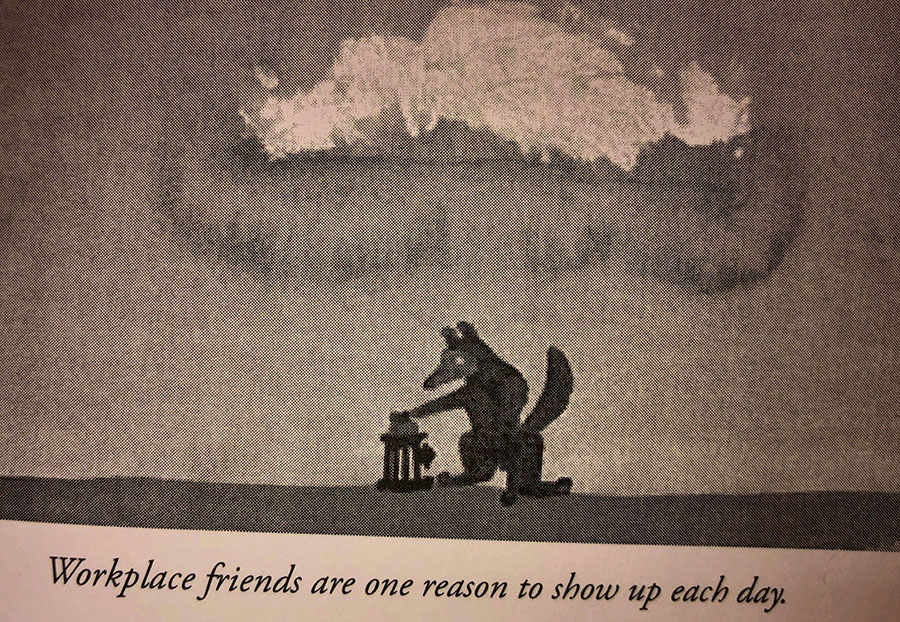
Of course, you have friends at work. If you don’t, work can become drudgery and make long days even longer. And while there’s nothing wrong with having friends who jump the boundary from work to after-work, from a psychological point of view, it is important to have friends who have nothing to do with work. Relaxing with friends from work presents two potential “uh-ohs”: 1) The subject of work will come up, and; 2) with no outside influences, ideas or observations, the flow of creative juices can be greatly inhibited.
Downtime is essential to clear, concise reasoning. Smart managers realize this small truth and make sure they take time off to re-energize. Many top-level managers make time to leave work behind on a regular basis. The ones who understand the value of time away from work always return with new ideas to create a better company. Their creativity is an offshoot of time away from the day-to-day chores that always abound in the modern company.
Your work world will survive if you are not available for a time for e-mail, phone calls or text messages. Truly, it will. Those who believe otherwise will forever be banished to Office Hell.
GIVE US YOUR FEEDBACK. CLICK ON “COMMENT” TO TELL US WHAT YOU THINK or use one of the alternative methods for providing feedback.
To get inside
the mind of Donald J. Trump, the 45th president of the United States
of America and make sense of the decisions he makes would take a world-class
team of psychiatrists armed with a bone saw and a commercial grade MRI machine.
The president
has said he goes with his “gut” in making important decisions and it’s easy to
see how that is the case: He has made decisions that have made cabinet members,
leaders and staff of the intelligence agencies, aides and even some followers
shaking their heads in amazement.
His penchant
for making a decision based the theory of the “trial balloon”, giving aides and
cabinet members direct instructions on how to proceed and then reversing it
after getting feedback, is the fodder of dysfunctional families and distressed
companies.
Trump, for a
reason known only to himself, has decided our main allies, the countries whose
soldiers have fought and died in mixed regiments made up from the best soldiers
from various nations, are not worth having as friendly neighbors in his view of
this greerdy, take-no-prisoners world.
Alliances
formed when the world was in flames and democratic and freedom-loving nations
fought for the right of every nation to be free, were, by the vote of our
Electoral College, were battered by the hysterical political newcomer who
proclaimed himself a “stable genius”. Trump literally insulted Great Britain,
France, Germany and other members of North Atlantic Treaty Organization by
berating them with tales of all the United States had done for them since the
mid-1940s.
Why, he
surmised, are we spending all this money on maintaining military presence in
Europe when the affected nations should be spending more money to protect their
own turf? This nation has been “Daddy Warbucks” long enough, seemed to be the
overall global message.
Each nation
is required to spend two percent of its Gross National Product figure on
NATO-related expenses; Trump contended, rightly or wrongly, that was not
happening and the U.S. was paying far more than its share.
The point is:
Having a strong U.S. military presence in Eastern and Western Europe greatly
benefits this nation; it’s not simply a matter of money, but the international
deterrent and security that is important. Retired Lt. Gen. Ben Hodges recently
addressed this issue, by saying he never imagined a president would kick
‘allies in the a**. When the president refers to the European Union as an enemy
of the United States, that’s a gift” to Russia and China.
Trump, by his
words, actions and reactions is the Demeanor in Chief. In his rally speeches,
tweets and in pubic forums and interviews, he has demeaned women, people of
color, countries he does not like (“s**thole countries”), U.S. territories – he
said he had talked to the “president of the Virgin Islands” and accused Puerto
Rico officials of unfounded charges of corruption as that island territory is
still trying to recover from Hurricane Maria, which hit the island in
September, 2017.
On April 1,
the GOP-controlled Senate (egged on by Trump’s tweets) refused to pass
additional aid for Puerto Rico without including relief for flooding and
tornado damage for the Midwest. Democrats voted against a second bill providing
relief for the Midwest, saying the amount of money for food relief for Puerto
Rico was not sufficient.
This is
government in the Age of Trump…compromises are for weaklings, each side of an
issue takes no prisoners, gives no quarter and the victors get what they want
and leave the spoils to the losers.
Where is the
nation’s integrity, its generous heart, its moral and ethical soul, its
indomitable courage when faced with adversity? We know it existed just a few
short years ago; we have witnessed its power to bring nations and people
together and spread the gospel of peace and prosperity around the globe; we
watched as nations sought to emulate the U.S. and become a sister-beacon of
light in a world of darkness.
All we need
is a leader who sees the beauty that exists everywhere in this melting-pot
nation and understand what made it great was inclusion, not rancor and constant
bad-mouthing, bullying and constant expressions of disillusionment.
GIVE US YOUR FEEDBACK. CLICK ON “COMMENT” TO TELL US WHAT YOU THINK or use one of the alternative methods for providing feedback.
Whether you are just starting off on your career journey or you have been a long-time employee, you may think every day that you are living on the edge of your abilities.
You’re not.
If you are like the huge majority of workers, you are ensconced inside a mile-wide comfort zone, not daring to step near the edges of your experience and abilities.
You may not recognize it, but your abilities will not grow, and the impact and importance of your experiences will shrink unlessand until you takes the necessary steps to live on the edge. Taking steps – even tiny, baby steps – past the edge of your self-imposed comfort zone is absolutely necessary for your personal and professional growth.
You know why you don’t venture closer to the edge. It’s your fear of failure — of biting off more than you can chew, of not gathering moss on your personal rolling stone, and a bevy of other clichés. Fear of failure is not fatal, but it’s also not conducive to progress among the office ranks.
If you feel you are watching the life drain out of your frame of opportunity — your abilities aren’t growing and the value of your experience is shrinking — then you have two choices:
Step back into more familiar surroundings and possibly stifle unseen opportunities, or
Step closer to the fearsome edge and get sucked away into a whole new universe of opportunity.
Of course, it’s frightening. The unknown always is. We all want to know what’s behind the veil of uncertainty in business or in life. Once you set foot in uncharted territory, you are where your hitherto accepted limits aren’t accepted, anymore.
It’s a time for reflection, reviewing old goals and setting new ones, and working to mesh your unspoken dreams with your new reality. You have faced your fears and taken decisive action to change what is within your power to change.
You are not the same person you were before you made a conscientious decision to actively seek change. Without experimentation, without exploring the depths of your potential, without expanding your knowledge base and business acumen, you cannot climb higher on the success ladder.
That which terrifies you also creates an opportunity for growth.
GIVE US YOUR FEEDBACK. CLICK ON “COMMENT” TO TELL US WHAT YOU THINK or use one of the alternative methods for providing feedback.





 iEXPOSED.us Blog
