THE TRIP FROM HELL

kenney180823-102w

By Barbara Kenney

Editor’s Note:
Even seasoned travelers can have bad trips. The Kenney family travel frequently but as you will see when you read this story not all trips are good trips.

By Barbara Kenney

How can a trip to the Big Island of Hawaii be a trip to hell? Well, it started the day before we left when Sylvia, our housekeeper, discovered that we have a rat problem in the house. In exploring we found evidence in several places and called Terminex immediately. It took a leap of faith to let them have a key to our house so they could perform their magic while we were gone, but we really had no choice.

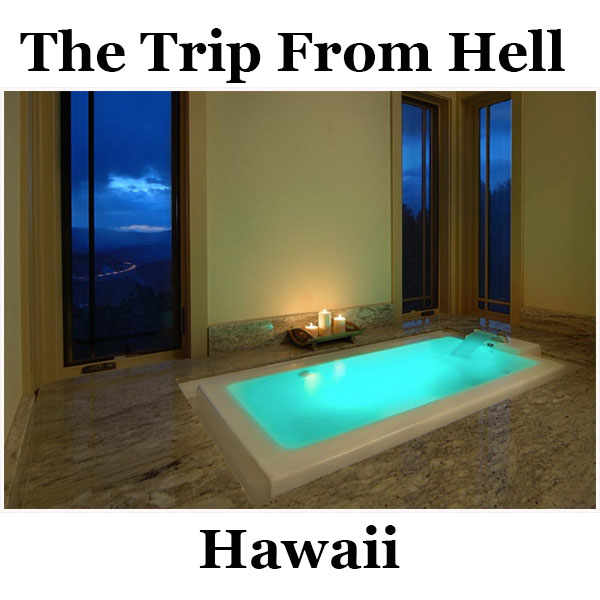
Our trip to the airport and flight to Hawaii were uneventful, but the tranquility didn’t last long. When we checked into our room at the Kingsland Time Share, they gave us a room that looked strange from the beginning and became more so as we explored. Our first clues were that there were no cabinet doors under the kitchen sink, and the washing machine was one story only. The bathroom seemed like a gigantic waste of space, and we wondered who their architect was. We decided this must be a handicapped room, which we definitely didn’t request. Then all of a sudden I thought – I wonder if there is a shower in that monster bathroom. There wasn’t! Only a giant bathtub in the middle of that wasted space. I really needed a shower, so I climbed carefully into the tub and took a tub bath.

The problem began when I tried to get out.
Click here to read the complete story

Pollino National Park – May 1, 2018 – Southwest Italy

allin180320-101wOv

By Tom Allin

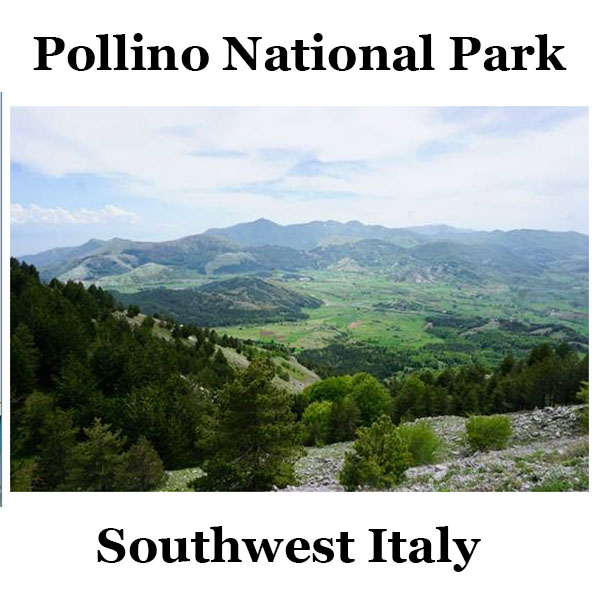
Our next stop is Maratea, Italy.  However, we are not going the most direct route but instead decided to drive east through Pollino National Park and then back west to Maratea.  Pollino is the first Italian National Park we are going to visit for some light hiking and hopefully a bird or two.

Pollino is Italy’s largest national park.  Being incredibly smart we knew we couldn’t explore it all in only a partial day visit so we decided to go to the top – Mt. Pollino and then look out to see as much park as possible.

Click here to read the complete article

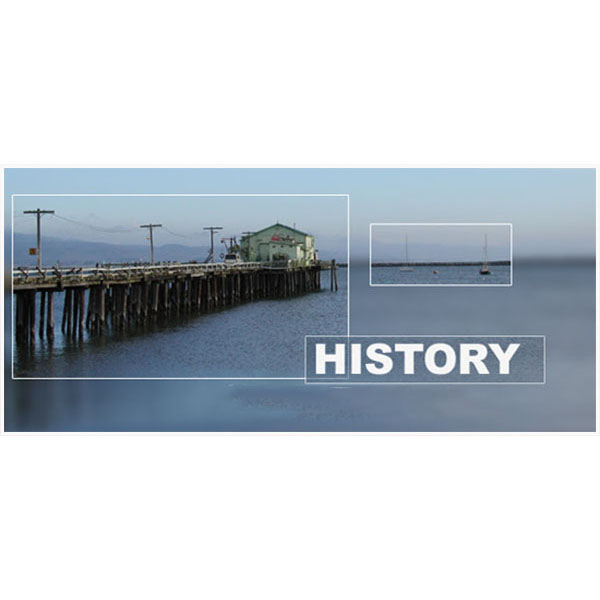
The Romeo Pier at Half Moon Bay 1944 – 2018

kenney180811-101w

By Jerry Kenney — August 10, 2018

Editor`s note:
Jerry Kenney is a travel writer in Northern California. He is a frequent traveler. He has been on all the seven continents and visited 125 countries in every parts of the world.

The Romeo Pier at Half Moon Bay 1944 — 2018

The Romeo Pier was constructed in 1944 to supply sardines and other fish harvested by local fishermen to the Romeo Fish Market in San Francisco. During its heyday, trucks hauled six to seven tons of fish a day from the pier to the wholesale market on Pacific Street in San Francisco. During June of 2018, at a cost of $2.3 million, the iconic but dilapidated Romeo Pier in Half Moon Bay was dismantled and removed.

It is not possible to separate the history of the pier from that of Tony Romeo, the man who, starting in 1945, continuously repaired the wood-framed, wooden decked, 690-foot-long pier that was supported by round wooden pilings for more than 40 years. The pier required constant maintenance and the replacement of rotting parts over more than four decades of exposure to the cold, foggy, stormy, marine environment of the central California coast. Generators, winches, pumps, water pipes, plumbing, electrical wiring, sewage lines, enormous freezers, and other equipment had to be kept operational despite heavy rains, high winds, strong currents, power failures, and other ongoing problems. Over decades of dealing with local fishermen and restaurants, Tony earned their respect with his fairness and honesty.

In the Half Moon Bay area between the two world wars the catch peaked in 1936 when 750,000 tons of fish were harvested. During the late 1940s and early 1950s, commercial fishing at Princeton boomed again; in 1950, 318,000 tons of sardines were harvested. A combination of factors reduced the yield to just 2,562 tons three years later. The sardine boom had ended; salmon, crabs, and rockfish became the focus of a much smaller fishing fleet.

Click here to read the complete article

Irana’s 17 years in Russian Gulags

kenney-100wOv

Jerry Kenney is a travel writer in Northern California. He is a frequent traveler. He has been on all the seven continents and visited 100s of countries in every parts of the world.

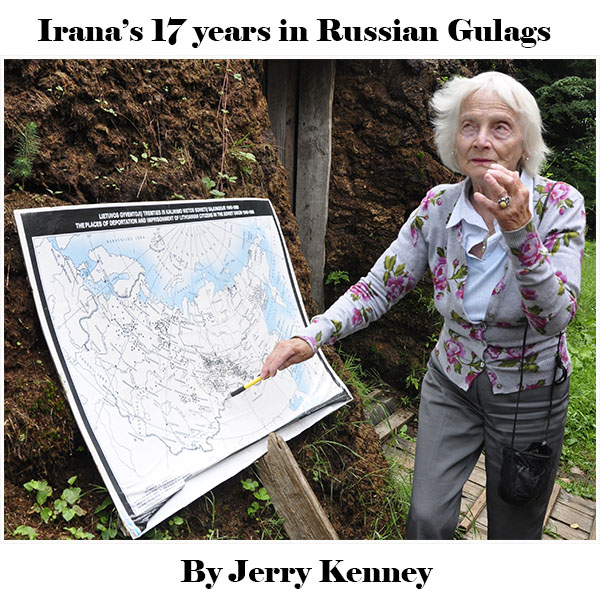
In 1941, Lithuania was a nation of 2.2 million citizens located on the Baltic Sea between Poland and the Soviet Union. It was an extremely dangerous place to live as Irana and her family quickly learned.

The Soviets had occupied Lithuania and established a repressive totalitarian regime. Stalin`s cruel directive to his occupying forces was “There will be a Lithuania, but without Lithuanians!” Two thousand “political activists” were arrested, twelve thousand “enemies of the people” were imprisoned, and seventeen thousand Lithuanians were deported to Siberia where they experienced inhumane treatment in forced labor camps.

Thirteen year-old Irana and her mother were arrested on June 15, 1941, put into a railroad car, and deported to a gulag located in a forested mountain area of southern Siberia. During their first winter in Siberia, Irana`s mother died from exposure to the extreme cold. Later, Irana learned that the Soviets had executed her father because he was an officer in the Lithuanian Army.

On June 22, 1941, the German Army invaded Lithuania and quickly drove the Soviet Army out of the country. At first, some Lithuanians had welcomed the Germans as “liberators” for freeing them from the repressive Soviet regime, and some even joined the Germans in fighting the Red Army. However, the Germans had not come to free the Lithuanians; they had come to seize men, supplies, and materiel to strengthen their forces for their invasion of the Soviet Union.

During the spring of 1942, Irana and a group of girls and women prisoners were transferred to a gulag at the mouth of the Lena River on the Arctic Ocean. Irana had traveled 6,000 miles by train during her captivity. The group was assigned the task of unloading US war materiel and food from small Russian boats that ferried cargo from American ships anchored in deep water to the port. Long hours and physically demanding work in the extreme cold led to exhaustion; diseases were rampant, prisoners were malnourished, physical abuse was widespread, and many prisoners succumbed. Stalin`s plan was to work the prisoners to death. He had some, but not complete, success.

Click here to read the complete story

Hiking Canyon X — Navajo Indian Reservation near Page AZ

CaynonX2wOv

by Stephen Ausherman — photography by Ron Munden

All I know is, I have to explore this mysterious slot dubbed Canyon X.

Something about the narrow depths of slots offers a kind of intimacy with nature that often gets lost in grander canyons. Lately, more and more travelers seem to appreciate this fact as they flock to popular draws like Buckskin, the longest slot canyon, and Antelope, the most photographed.

Innumerable slot canyons cut through the northern Arizona desert, but gaining access poses its challenges. For one, entries are often too steep for hikers without ropes and gear. Another, many slots slice through Navajo land. Exploring the terrain here requires permission, which can be difficult to obtain.

Such was the case for a particularly stunning slot on Navajo land. Harley Klemme, whose aunt owned the grazing rights, wanted to share its splendor with visitors, but feared too many would spoil the experience. He compromised by offering exclusive access to small groups.

Click here to see the slideshow/gallery

Tropea – April 28 – 31, 2018 – Tropea, Italy

allin180319-101wOv

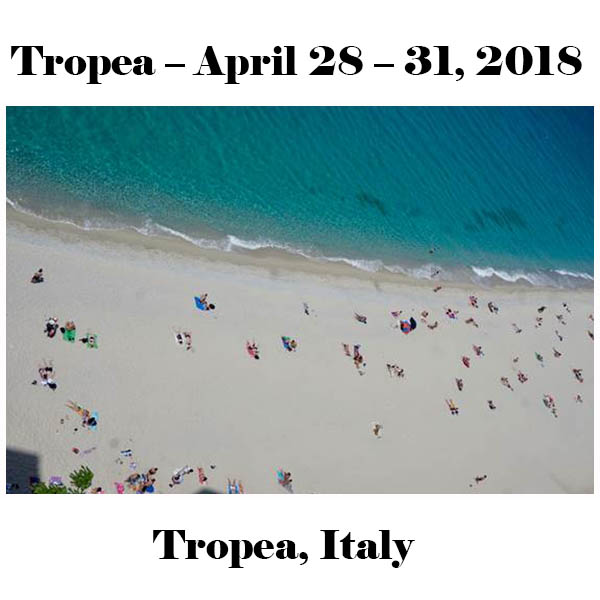
Due to our unexpected sight seeing tour around Mt. Etna this morning we arrived in Tropea after 8:00 pm.  Normally this wouldn’t have been a big issue but we had no room reservation.  Neither of us was for pitching the tent and using our sleeping bags.

I pulled over to the side of the road: (a) in front of us was a restaurant, (b) then a pedestrian only street, (c) then a one-way street coming at us, (d) people everywhere and (e) did I mention we had been on the road for ten hours and it was dark like in night dark.

Of course we were illegally parked.  However, unlike the U.S. no one honked at us.  Most likely they assumed it was an Italian driver driving the Texas licensed 4Runner and everyone knows Italians only park where it is illegal!

Long story short on our second try we found a great place to stay.  OK, it was on the second floor or three flights up and outside of the high side of our lodging budget but it is now 8:45 and we want a room.

The following morning after a great breakfast we went exploring.  The views were great but damn I forgot my binoculars.

Click here to read the complete article