
By Ron Munden – February 6, 2020
USS Thresher (SSN-593) … On 10 April 1963, Thresher sank during deep-diving tests about 220 miles (350 km) east of Boston, Massachusetts, killing all 129 crew and shipyard personnel aboard in the deadliest submarine disaster except for the French submarine Surcouf (130 crew lost).
Given the fact that this submarine was going out on its first dive to test depth, well over 100 shipyard personnel would be on board plus 129 crew. The Thresher’s loss of life was far greater than that of the Surcouf.
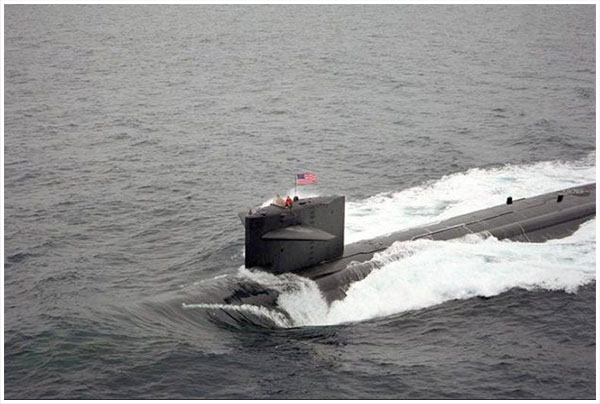
In the summer of 1968, I was preparing to take my first dive on a submarine. I was going to go to sea on the USS Permit (SSN-594) and I had no idea what to expect.
The USS Permit became the lead ship of her class of submarine when the former lead ship, the USS Thresher, was lost.
The submarine was scheduled to depart Mare Island on a Monday. The previous Friday all the shipyard personnel who were scheduled on this sea trial were taken to a conference room and shown a film on how to use the escape hatch to exit a disabled submarine. It was a detailed film covering each step a person must take to exit the submerged vessel.
After the film ended the instructor said that the greatest depth someone had successfully executed this procedure was 400 feet. He also said the depth of the water where we would be diving was well over 1000 feet. I did not find this comforting.
That weekend my wife and I went camping. I would like to say that I did not give my first dive a thought during that weekend. But I don’t lie well. I gave it a lot of thought. I did not know what to expect.
At noon on Monday I was climbing down the ladder into the torpedo room on the Permit. Shortly after that the hatches were closed and we were off on our 12-day adventure.
Attack submarines are designed for a crew of about 125 people. On the initial sea trial there are over 100 additional shipyard people on board. This is because after undergoing an 18-month overhaul it is expected that the ship will encounter some problems on the first dive, so you have to have wrench-turners, electricians, and all the other trade people to fix minor problems while the sea trial is underway.
Since there are no bunks for these 100 or so people, the torpedo room becomes a dorm for the yardbirds (the sailor’s term for shipyard workers). Submarines going out on the first dive do not carry weapons; therefore, the torpedo skids are empty. Bunk mattresses are thrown over the torpedo skids. A person can sleep on these mattresses in the sleeping bag they brought on board. Since there is not nearly enough space for 100 mattresses, people must “hot bunk.” One person gets the torpedo skid for 8 hours, then they get up and a second person takes the space. Eight hours later a third person gets his turn. This routine continues for the duration of the sea trials.
Attack submarines are small compared to surface ships and even ballistic missile submarines so there is no place to sit when you are out of the rack you either stand or use your sleeping bag as a stool.
Because there are many more people on board than is normal, the Navy turns the shower stalls into food lockers. There were no complaints about not being able to shower for 12 days because on every submarine that I was ever on the food was excellent. It is amazing what the crew can do in a small cooking space.
The biggest irritant I found on board was smoke. In 1968 smoking was allowed in all compartments. Since sea trails are boring because there is nothing to do if you are not working, which is most of the time, people smoke a lot. A blue haze hangs over the torpedo room for the duration of the sea trails.
There is one source of entertainment – making fun of the rookies on board.
I was no exception.
When I got down into the torpedo room, I found that the old pros had already begun staking out their spaces on the torpedo skids. I thought I was very smart when I found a stainless-steel surface that was about three feet behind a torpedo tube. It was unoccupied so I staked it out by unrolling my sleeping bag. In retrospect, I guess it was not taken because there was no mattress, and no one wanted to sleep on a stainless-steel surface. At 20-something I could sleep anywhere so I did not see that as a problem.
When you are on a first sea trial many tests are run on the surface before the submarine makes a dive. One of the surface tests is to fire water slugs from all the torpedo tubes. At some point during the first 24 hours they ran this test. I was lying in my sleeping bag directly behind one of the torpedo tubes when they began the test on that tube. When they fired the first water slug, a seal on something directly in front of me failed. Instantly a 1/8” spout of water started shooting out and scored a direct hit – on my forehead. Unfortunately, I was zipped in my sleeping bag and could not move to get out of the way. Did anyone come to my rescue? No! Everyone in the torpedo room began laughing as they watched me trying to free myself from my sleeping bag. Fortunately, a couple of sailors came running over and began deflecting the water into a bucket until someone could get in position to fix the leak. That was my baptism on aboard submarines.
Of course, the most interesting test is the first dive to test depth. In 1968 the test depths for submarines were classified. I will treat it as classified today since I don’t know if it is still classified. I was told that when asked the question you could say it is greater than 1000 feet.
On the first drive the Captain does not vent the main ballast tanks and go directly to test depth. He does it 100 feet at a time. When the Captain reaches 100 feet he holds the boat at that depth. The crew inspects all the compartments for leaks. After all the compartments report no leaks the Captain takes the ship down another 100 feet and the search for leaks is repeated. This process is continued until the boat reaches test depth – the maximum depth at which the boat is designed to operate.
When the Permit started its first dive to test depth someone tied a rope across the expanse of the torpedo room. As the submarine gets deeper the outside water pressure increases and begins to compress the pressure hull which means the once tight rope begins to sag. Of course, this is done to make the trip more meaningful for the rookies on board.
One sobering fact that I was told is that if there is a ¼” diameter leak in the main seawater system you have less than a minute to stop the leak or you will be unable to recover the ship. That tells you how much pressure there is on the hull at test depth.
During most of the duration of the sea trial I sat and did nothing. Finally, on the last day and the last dive I got to do my thing. The boat conducted a trim dive and I got to capture all the data from the test.
The Captain took the submarine to 100 feet depth – a depth where the boat is not affected by wave action on the surface and the water pressure is too low to change the hull configuration. The crew adjusts the water in the variable ballast tanks to bring the boat to a state of equilibrium. Without the prop turning the submarine is stable. It is not floating up and it is not sinking. The ships buoyancy equals the ships weight and the boat is not trimming by the bow or the stern.
With that complete the Captain blew the main ballast tanks, surfaced, headed for the Golden Gate Bridge and Mare Island Naval Shipyard. I spent the next few hours running around the sub taking readings from all the tanks and collecting other data that allowed the shipyard to certify that the ship could drive in all the loading conditions specified by the Navy.
My first trip on a submarine was complete.
I estimate that about 98% of the engineers working at Mare Island never got to ride a ship to sea. I feel lucky that I worked in an organization that allowed me the opportunity to go to sea. I only did this work for a year or so before I moved on to another job, but during that time I got to ride three or four submarines. It was a great experience.
I have great respect for the submariners of the US Navy. I have seen them in action – up close and personal. They have a difficult job but an important job. What they have done and continue to do is invaluable to the security of this country. Many have said that some of their special ops during the cold war kept us out of World War III – read Blind Man’s Bluff.
GIVE US YOUR FEEDBACK. CLICK ON “COMMENT” TO TELL US WHAT YOU THINK or use one of the alternative methods for providing feedback.

 iEXPOSED.us Blog
